Rollover Accidents in Arizona Common Causes and Severe Injuries
Rollover accidents rank among the most dangerous crashes on Arizona’s roads. These incidents happen when a vehicle tips onto its side or roof, and the aftermath can be devastating—sometimes fatal. With high speeds on desert highways, a lot of SUVs and trucks with top-heavy designs, and sudden maneuvers, rollovers happen more often than most folks realize.
Arizona’s roads throw some curveballs—literally and figuratively. From high-speed freeways slicing through the desert to winding mountain highways, there’s plenty of opportunity for things to go sideways. Driver behavior, vehicle design, and road conditions all mix together, and sometimes that mix ends with a car on its roof.
Injuries in rollovers tend to be especially nasty. Victims can get ejected, crushed, or battered as the vehicle spins and rolls. It’s important to know the risks, the causes, and what legal options you have if you ever end up in one of these crashes.
What Are Rollover Accidents?
Rollover accidents are what they sound like: a vehicle tips over onto its side or roof during a crash. These are a different beast compared to your standard fender-bender.
Definition and Types of Rollover Accidents
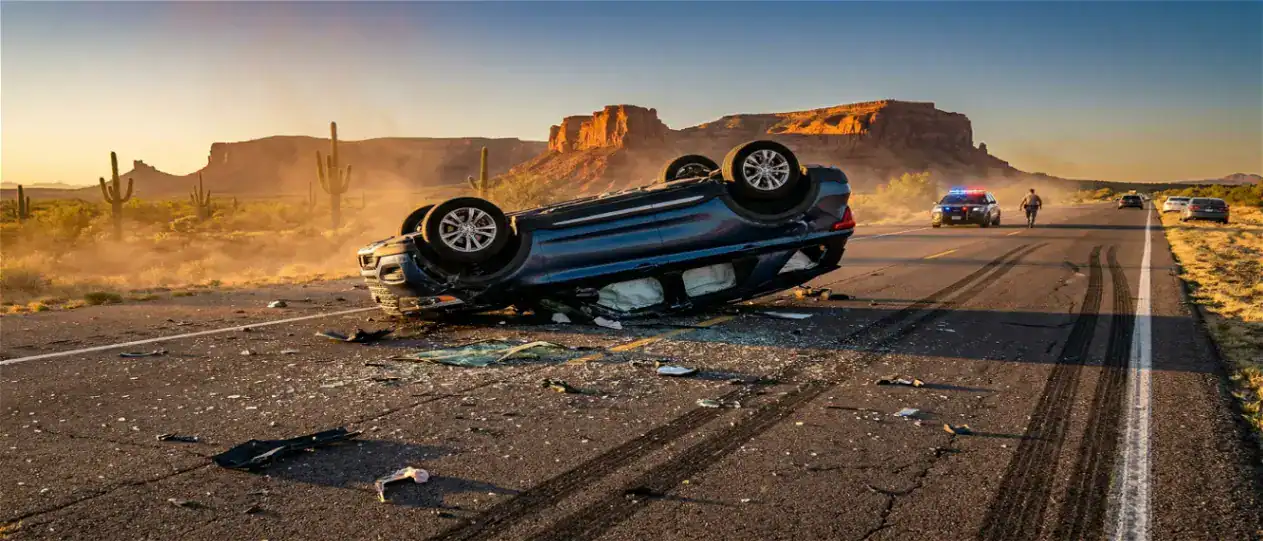
A rollover car accident means the vehicle rotates or flips—maybe just once, maybe several times—before coming to a stop.
There are two main types of rollovers:
- Tripped rollovers – These happen when a car hits something—like a curb, guardrail, or even just a patch of soft dirt—and flips over.
- Untripped rollovers – These occur without hitting anything; usually it’s a sharp turn or sudden swerve that tips the vehicle.
Most rollovers are tripped. SUVs, pickups, and vans are more likely to roll than sedans because they’re taller and more top-heavy. Passenger cars can roll too, but it’s not as common.
How Rollovers Differ From Other Crashes
Rollover accidents are a whole different animal. In a regular crash, cars slide or get pushed around. In a rollover, the vehicle actually rotates, which puts a ton of stress on the car’s frame—and on the people inside.
The roof can collapse, and people can get tossed around or even thrown out of the car. Seatbelts don’t always help as much as you’d hope, since the forces are coming from all directions.
These crashes tend to cause more severe injuries than most others. With each roll, there’s another chance to get hurt. Even the stuff inside your car can become a hazard as it flies around.
Major Causes of Rollover Accidents in Arizona
In Arizona, rollovers usually trace back to three things: how people drive, what they’re driving, and the roads themselves. Often, it’s a combination.
Driver Behavior and Mistakes
Driver choices are a big factor. Speeding is a classic culprit—especially on rural highways where the speed limit is high. Go too fast, and you don’t have time to react if something goes wrong.
Aggressive driving—quick lane changes, sharp turns, or sudden swerves—can easily tip a vehicle, especially at speed.
Distractions are a problem, too. If you’re texting, fiddling with the radio, or just not paying attention, it’s easy to miss a curve or a hazard until it’s too late.
And of course, impaired driving makes everything worse. Alcohol or drugs mess with your judgment and reflexes, which is a recipe for disaster.
Vehicle Type and Dynamics
What you drive matters. SUVs and trucks sit higher off the ground, so they’re more likely to tip if you turn too sharply or swerve.
Tire condition is a big deal. Bald tires or a blowout can make you lose control in a heartbeat. At highway speeds, a blown tire can send you rolling before you know it.
Things that up your rollover risk:
- High center of gravity
- Narrow wheelbase
- Lopsided cargo or bad loading
- Design defects
Sometimes, it’s the manufacturer’s fault—weak roof, poor stability controls, or other design flaws.
Road and Environmental Conditions
Arizona’s roads aren’t always forgiving. Rural highways have sandy shoulders that don’t offer much support. Drift off, and your tire can dig in and flip the vehicle.
There’s also uneven pavement, potholes, and stretches of road that just aren’t well maintained. All of these can mess with your stability.
Some common hazards:
- Soft or sandy shoulders
- Sharp curves on fast roads
- Wet or slick pavement during storms
- Not enough safety barriers on rural roads
Most fatal rollovers happen on rural roads, where you’re less likely to find guardrails or good lighting.
Driver Factors Leading to Rollover Crashes
Drivers make mistakes. Sometimes it’s just a lapse in judgment, sometimes it’s carelessness or worse. Either way, it can turn a normal drive into a nightmare.
Aggressive and Reckless Driving
Driving aggressively—swerving, tailgating, or making sudden lane changes—makes it much easier to lose control.
Taking turns too fast is a classic mistake. If you push it, the car’s momentum can tip it right over.
Road rage? That’s a whole other level. Jerking the wheel in anger, especially in a tall vehicle, can easily end in a rollover.
Risky behaviors that often cause rollovers:
- Cutting off others
- Taking corners too quickly
- Ignoring traffic signs
- Passing recklessly on curves or hills
Distracted or Impaired Driving
When you’re distracted—texting, eating, talking to passengers—you’re not focused on the road. That split-second delay can make all the difference.
Impaired drivers, whether from alcohol or drugs, have slower reactions and poor coordination. They’re more likely to overcorrect if they veer off course, which can roll a vehicle even at moderate speeds.
Drowsy drivers can be just as dangerous. Nodding off or zoning out behind the wheel means you might not see a hazard until it’s way too late.
Speeding and Sudden Maneuvers
Going too fast leaves you less time to react. Even a small steering correction at high speeds can send a vehicle into a spin or roll.
Curves are especially dangerous at high speeds. Tires can lose grip, and the car can slide sideways and roll.
When people swerve hard to avoid something—an animal, another car, whatever—the tires can grab and flip the vehicle, especially if you hit a curb or soft shoulder.
Desert highways are tricky. If you drift onto a sandy shoulder at speed, it’s easy for a tire to dig in and tip the car.
Vehicle and Road-Related Risks
Some vehicles are just more likely to roll, and sometimes the road or a mechanical problem pushes things over the edge.
Design Defects and Stability Issues
SUVs, trucks, and vans are more top-heavy, so they’re less stable in sharp turns or sudden swerves. That extra height means they’re easier to tip.
Some vehicles have built-in stability issues. A narrow wheelbase and tall profile is a bad combo. Some don’t even have proper stability control systems.
How a vehicle’s weight is distributed, how wide it is, and how high it sits all affect how it handles when things go sideways. Top-heavy vehicles just don’t respond like sedans do when you need to make a sudden move.
Tire Failures and Mechanical Problems
A tire blowout at highway speed is bad news. Drivers often yank the wheel trying to regain control, and that’s how rollovers start. Worn, underinflated, or defective tires are especially risky in Arizona’s heat.
Mechanical problems—like busted steering or suspension—don’t help. If you can’t steer or the suspension fails, it’s tough to keep things upright.
A little maintenance goes a long way. Check your tires, keep them inflated, and don’t ignore steering issues.
Hazardous Road Conditions
Bad roads are just asking for trouble. Hit a pothole or an uneven patch, and your tire can catch, flipping the vehicle. Sandy shoulders along highways can do the same if you drift off the pavement.
Poor maintenance—crumbling edges, debris, or unpaved shoulders—only makes things worse. Sometimes the agency in charge of the road is partly to blame.
And then there’s the weather. Rain makes roads slick, and dust storms can cut visibility and leave a fine, slippery layer on the pavement.
Severity and Types of Rollover Accident Injuries
Rollover accidents can leave people with some of the worst injuries you’ll see on the road. The forces involved are brutal, and the damage can last a lifetime.
Catastrophic and Life-Threatening Injuries
Traumatic brain injuries are a huge risk. In a rollover, you might hit your head multiple times—on the roof, windows, or whatever else is in the way. The results can be permanent: memory loss, personality changes, and worse.
Spinal cord injuries are also common, especially if the roof caves in or you get tossed around. Paralysis, chronic pain, and the need for lifelong care are all possible outcomes.
Internal injuries are sneaky. You might not see them right away, but torn organs can be deadly if not treated fast. The liver, spleen, kidneys, and lungs are all at risk.
Common Physical Trauma
Broken bones are almost a given. Ribs, arms, legs, pelvis—you name it. Multiple impacts and collapsing metal make fractures likely, and some need surgery to fix.
Cuts from broken glass or jagged metal are another issue. Deep lacerations can damage muscles or nerves and often leave scars. Severe ones can cause dangerous blood loss.
Burns can happen if the car catches fire or hot fluids spill during the crash. These are some of the most painful injuries and can cover large areas.
Psychological and Emotional Impacts
Surviving a rollover can mess with your mind. PTSD is common—flashbacks, nightmares, and a real fear of getting back in a car.
It’s not just PTSD, either. Depression and anxiety can set in, especially for those facing permanent injuries. The emotional fallout can linger for years, affecting relationships and day-to-day life.
Determining Liability and Compensation
Rollover accidents in Arizona can involve several parties sharing blame. It might be a negligent driver, a manufacturer with a defective vehicle, or even a government agency that didn’t maintain the road.
Negligent Drivers and Liability
Driver negligence is still the main culprit behind rollover accidents in Arizona. Speeding, texting behind the wheel, driving under the influence, and those sudden overcorrections can all send a vehicle tumbling. When someone doesn’t drive safely, they’re on the hook for injuries and property damage that follow.
A personal injury lawyer will dig into the crash, pulling together police reports, witness accounts, and sometimes even accident reconstruction experts. They’re looking for signs the driver broke the law or just acted carelessly. Arizona uses comparative negligence rules, so even if you’re partly at fault, you can still seek compensation.
Insurance companies, let’s be honest, usually try to dodge responsibility by blaming victims. That’s where having a lawyer matters—they’ll fight to make sure blame lands where it should. If another driver’s carelessness led to the rollover, victims can pursue compensation for medical bills, lost income, pain and suffering, and property damage.
Manufacturer and Product Defects
Sometimes it’s not just the driver—vehicle manufacturers can be at fault if their design or parts are defective and play a role in a rollover. SUVs and trucks, with their high centers of gravity, are especially at risk. Things like bad tires, steering issues, or roofs that just aren’t strong enough can turn a minor mishap into a disaster.
To win a product liability case, you’ve got to show a defect existed and that it actually caused or made injuries worse. Manufacturers have to meet federal safety standards for rollovers and occupant safety. If they don’t, they can be held liable.
Lawyers often bring in engineering experts to spot defective parts and pin down who’s responsible. Sometimes these cases uncover recalls, old complaints, or test results showing the vehicle’s flaws. It’s not always just the manufacturer on the hook—parts suppliers and dealerships might be involved too.
Government and Road Maintenance Responsibility
Government agencies in Arizona are supposed to keep roads safe. Poor design, missing guardrails, bad signage, and those dreaded potholes can all contribute to rollovers. Uneven surfaces and sandy shoulders? On desert highways, they’re a real problem.
Going after a government agency is a bit different than a regular injury claim. In Arizona, you’ve got just 180 days from the accident to file a notice of claim. You also have to show the government knew (or should’ve known) about the hazard and didn’t fix it.
Responsibility for road upkeep can fall to state, county, or city agencies, depending on where the crash happened. A personal injury lawyer can help figure out who’s responsible and guide you through the maze of government claim rules. If lousy road conditions played a big part in the rollover, victims can seek damages.
Steps to Take After a Rollover Accident in Arizona
What you do right after a rollover can make a huge difference for your health and your legal options. Getting medical care, collecting evidence, and knowing when to call a lawyer are probably the most important things you can do after a crash like this.
Prioritizing Medical Care
Call 911 right away, even if you think you’re okay. Some serious injuries—internal bleeding, brain trauma—don’t always show up right away.
Let emergency responders check everyone out at the scene. If you refuse medical help, it could actually hurt your injury claim later. Insurance companies love to argue that waiting for treatment means you weren’t really hurt.
Try to see a doctor or go to the hospital within 24 hours. That way, there’s a clear medical record connecting your injuries to the accident. Stick with your treatment plan and don’t skip appointments.
Hang on to every medical bill, prescription, and record you get. These papers show how badly you were hurt and how much treatment cost. They’re crucial if you need to file an insurance claim or lawsuit.
Documenting the Scene and Collecting Evidence
If it’s safe, take lots of photos—every angle of all vehicles, the rolled car, tire marks, and where everything landed.
Get shots of the accident scene, note the weather, and look for road hazards. Jot down your memory of what happened while it’s still fresh. Grab names and contact info from any witnesses.
Report the accident to Phoenix police or the Arizona Department of Public Safety. Ask for a copy of the official police report, since it’ll have the officer’s take on what caused the crash. Don’t rush to repair the car—keep it as-is until a lawyer or insurance adjuster can check it out.
Save every document tied to the accident: towing receipts, rental bills, repair estimates. All of these help prove what the crash cost you.
When to Contact a Personal Injury Lawyer
It’s usually smart to reach out to a personal injury lawyer before you start chatting with insurance companies about who’s at fault or what kind of settlement they’re offering. Insurance adjusters have a knack for nudging people into quick, lowball deals or getting them to say things that can mess up their own claims.
If you’ve been in an accident, don’t wait too long to look for legal advice—ideally, do it within a few days. Arizona gives you two years to file a lawsuit, sure, but let’s be honest: the longer you wait, the fuzzier memories get and the harder it is to track down solid evidence.
A lawyer’s help becomes almost essential if your injuries are serious, if it’s unclear who’s to blame, or if the insurance company just flat-out rejects your claim. Rollover accidents, for example, can get messy with all the questions about possible vehicle defects, bad road design, or maybe even tire issues—stuff that really needs a closer look.
And then there’s Arizona’s comparative negligence system. Basically, your compensation can get chopped down depending on how much of the blame falls on you. Having someone in your corner who actually knows how to navigate all that can make a real difference in what you end up recovering.