Underride Accidents- Why They’re So Deadly and Who’s Responsible
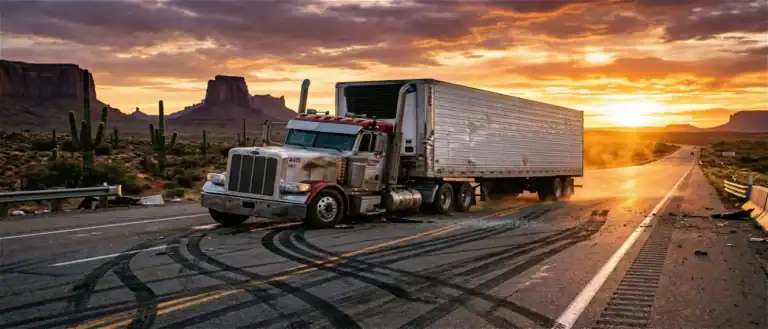
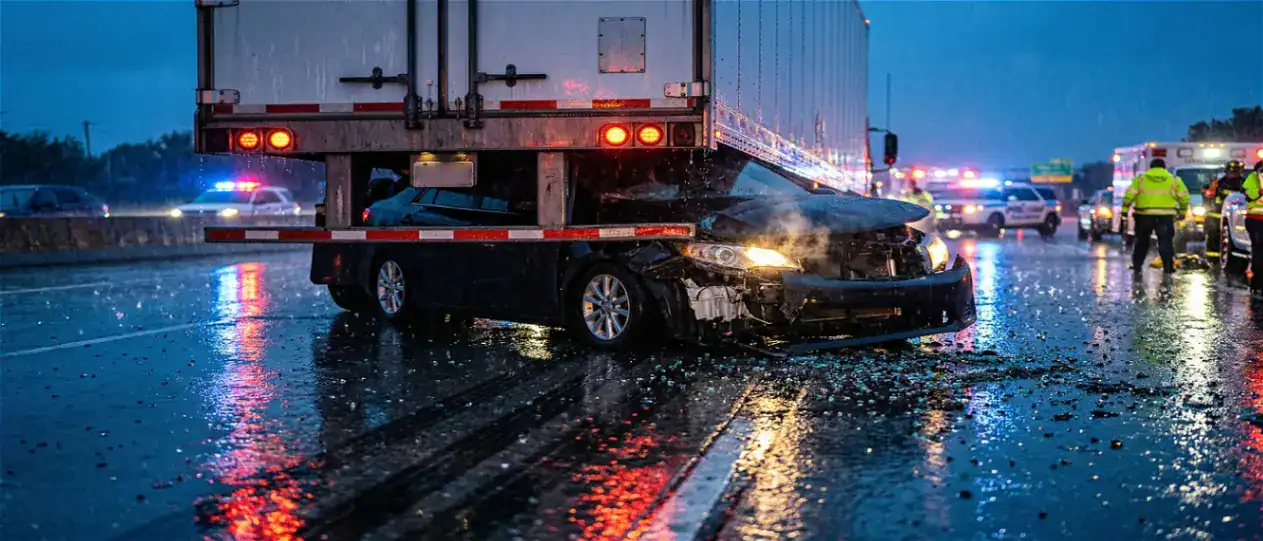
Underride accidents—when a smaller vehicle slides under a large truck during a crash—are some of the most terrifying collisions you’ll find on the road. The impact point is way higher than in a typical fender-bender, often blasting right through the windshield or roof, and skipping all those safety features you hope will save you.
When a car ends up under a truck’s trailer, the top of the car can get crushed, putting anyone inside at risk for catastrophic head and neck injuries, or worse. Over 400 people died in underride crashes in 2021, though the real number’s probably higher—many police departments don’t even track these accidents properly.
So, what actually causes these wrecks? And who’s left holding the bag? Let’s get into why underride accidents are so deadly, how they happen, what’s going on with safety equipment and laws, and who’s usually on the hook when things go wrong. If you ever drive near big rigs, it’s worth knowing.
What Makes Underride Accidents So Deadly
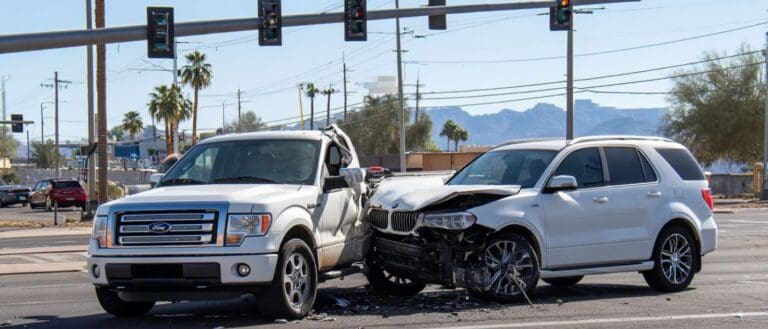
Underride crashes leave a brutal mark because of how cars and trucks line up when they collide. The height difference means all the crash energy skips the bumpers and goes straight into the most vulnerable part of the car.
Geometric Mismatch Between Trucks and Passenger Vehicles
The root of the problem is the size mismatch. Most cars are just 2 or 3 feet off the ground, but a truck trailer sits up at 4 feet or even higher. That gap is a dangerous invitation—if something goes wrong, the smaller vehicle can just keep sliding under.
The wheels on big trucks leave open spots along the sides and back. When a car hits those spots, nothing stops it from going right under the trailer. The truck’s frame just passes over the car’s hood, missing the bumper entirely.
So, instead of a bumper-to-bumper crash, you get the full force of the collision hitting the windshield or roof. That’s exactly where people are sitting.
Failure of Standard Vehicle Safety Features
All those safety systems in cars? They’re mostly designed for crashes at bumper or hood level. In an underride, the impact point moves up, and a lot of protections just don’t work.
Here’s what usually fails:
- Airbags – The crash sensors might never even go off, so airbags don’t deploy.
- Crumple zones – The hood and engine are designed to absorb force, but they just slide under the trailer and do nothing.
- Structural pillars – The door frames and roof supports can get ripped away by the trailer’s underside.
Seat belts are still there, but if the whole passenger area collapses, they can’t do much. Truck drivers, meanwhile, are usually fine—they’re sitting way above the crash and sometimes don’t even realize what just happened.
Typical Injury Patterns and Fatal Outcomes
The injuries in these crashes are as bad as you’d imagine. The impact is right at head and chest level, so traumatic brain injuries, spinal damage, and severe facial trauma are common. Over 400 people died in 2021 alone, based on federal data.
And honestly, nobody seems to know the real scope of the problem. Many states don’t have a clear definition for underride crashes, and a lot of police reports just lump them in with other types of wrecks. Officers aren’t always trained to spot them, so the numbers are likely undercounted.
Types and Scenarios of Underride Accidents
There are three main ways these crashes go down, depending on where a car ends up sliding under a truck. Each has its own set of risks, and they tend to happen in different situations.
Rear-End Underride Collisions
This is probably the one most people picture: a car slams into the back of a truck and ends up wedged beneath the trailer. It happens a lot when trucks slow down or stop suddenly, especially on highways or in bad weather. The car’s front end just disappears under the trailer bed.
Trucks are supposed to have rear underride guards—those metal bars that hang down from the back to stop cars from sliding under. But a lot of the guards out there aren’t strong enough and can fail in a real crash. The Department of Transportation did update the standards in 2024, but plenty of older trucks are still using the weaker versions.
Truckers sometimes park on the shoulder or in dimly lit spots, and if you can’t see the trailer until the last second, it’s a recipe for disaster. Nighttime crashes like this are especially deadly because the trailer can just blend into the darkness.
Side Underride and Side Collisions
Side underride crashes happen when a car hits the side of a truck between the wheels and ends up underneath. This can happen during wide turns, lane changes, or at intersections. If a truck makes a right turn from the left lane, for example, a smaller car might try to pass on the right and wind up in a bad spot.
Typical scenarios:
- Trucks swinging wide at intersections
- Lane changes where the truck driver doesn’t see a car in the blind spot
- Slow or stopped trucks blocking part of the road
There’s no federal rule requiring side guards on trucks, even though studies show they’d save lives. The industry’s pushed back on making them mandatory, so most trailers are wide open along the sides.
Offset and Front Underride Incidents
Front underride crashes are less common but still pretty grim. They happen when a truck’s high front end rides up over the hood of a smaller car—usually in a head-on collision or when a truck rear-ends a car at speed.
Because of the height, the truck just climbs over the car’s front, bypassing all those crumple zones and safety features. The force hits the passenger area directly, which is as bad as it sounds.
Key Contributing Factors in Underride Crashes
There’s usually more than one thing that goes wrong in these crashes. It’s a mix of driver behavior, road conditions, visibility, and sometimes just bad luck.
Driver Behavior and Human Factors
Driver mistakes are a big part of the problem. Tailgating trucks leaves almost no time to react if they slow down. It’s even worse at night, when judging distance is tough.
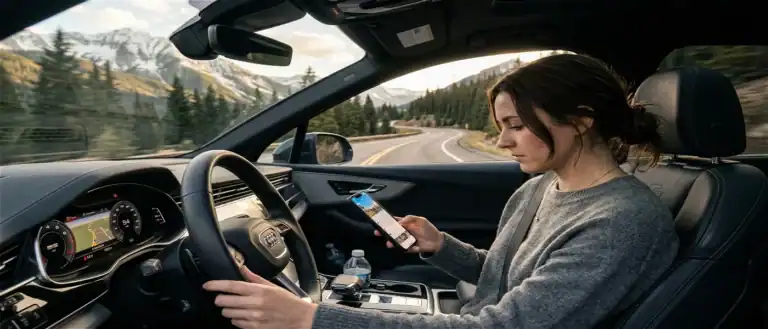
Distracted driving is a huge risk. If you’re looking at your phone, you might not notice a truck until you’re right on top of it. Fatigue—on either side—slows reaction time and makes bad decisions more likely.
Some drivers misjudge how fast trucks are moving, or don’t realize how long it takes a big rig to turn or change lanes. That can lead to pulling out in front of a truck or trying to sneak by during a turn.
Visibility and Roadway Conditions
Poor visibility is a killer in underride crashes. Trucks have massive blind spots, and in the dark or bad weather, a trailer without good reflectors is almost invisible.
Nighttime is especially dangerous—over 100 underride deaths in 2021 happened during low-light conditions. If a trailer isn’t well-lit or marked, other drivers might not even know it’s there until it’s too late.
Fog, rain, and snow only make things worse. Stopping distances go up, and it’s easier to lose control and slide under a truck.
Vehicle Speed and Stopping Distance
Speed’s a huge factor. The faster you’re going, the less time you have to react to a slow or stopped truck. If you hit a truck at highway speed, the forces are brutal.
Even a moderate speed can be deadly if you end up under a trailer. The car’s roof and upper body take all the energy, not the front bumper or crumple zones.
Improper Truck Parking and Maneuvers
Trucks parked in the wrong place—like on the shoulder or partially in a lane—are a real hazard, especially at night when you can’t see them. If a truck is just sitting there without warning devices, it’s almost impossible to avoid.
Lane changes and wide turns are risky moments too. If a truck moves over without enough space, or swings wide and blocks multiple lanes, it can force other drivers into bad decisions.
Backing up is another risky move. Most people don’t expect a truck to reverse, and by the time they realize it, it might be too late.
Critical Role of Underride Guards and Safety Equipment
Underride guards are supposed to stop cars from sliding under trucks, but their effectiveness varies a lot depending on design, placement, and whether the truck owner actually keeps them in good shape.
Rear Underride Guards: Current Standards and Effectiveness
Rear underride guards have been required since the late ‘90s. They’re supposed to keep cars from going under the trailer in a rear-end crash.
But here’s the thing—a lot of guards can’t handle impacts above 35 mph. The federal standard is only for 30 mph crashes, which doesn’t help much on highways.
How well these guards work depends on:
- How strong they are and how well they’re made
- Whether they’re installed and maintained correctly
- The speed and angle of the crash
- The size of the vehicles involved
Some companies are making stronger guards that go beyond the minimum, and those seem to do better in real-world crashes.
Side Underride Guards: Usage and Regulatory Status
There’s still no federal rule for side underride guards in the U.S., which is kind of wild considering how much open space there is along the sides of trailers.
Longer trailers just mean more risk. A few trucking companies have started adding side guards on their own, but it’s definitely not the norm.
Without a mandate, most trailers are just exposed, especially in situations like intersections or lane changes.
Engineering Tests and Research
The Government Accountability Office told the Department of Transportation back in 2019 that more research was needed on side underride guards. Engineers run crash tests at different speeds and angles to see which designs actually work.
They look at how much the guard keeps the car out of the passenger compartment, and what kind of damage happens. Crash reconstruction experts also dig into real-life wrecks to figure out where current designs fail and how to improve them.
Responsibility and Liability in Underride Accidents
When an underride crash happens, it’s rarely just one person’s fault. The truck driver, the trucking company, and sometimes even the equipment manufacturers might share the blame.
Truck Driver Liability for Collisions
Truck drivers have a legal duty to operate safely. If they don’t, and their actions cause an underride crash, they can be held liable.
Negligent behaviors that can land a driver in hot water include:
- Not using hazard lights when stopped or moving slowly
- Failing to signal for lane changes or turns
- Parking on the road without warning devices
- Driving distracted or while exhausted
- Breaking hours-of-service rules
Skipping vehicle inspections is another big one. Truck drivers are supposed to check that all the lights and reflective tape are working before hitting the road. If they don’t, and an underride crash happens, that’s on them.
Speed matters too. If a driver brakes hard with no warning or drives way under the speed limit without using hazard lights, they’re making things dangerous for everyone else.
Trucking Companies and Fleet Owners’ Duty
Trucking companies can end up legally responsible for underride accidents, even if they weren’t directly at the wheel. Their obligations go beyond just day-to-day operations—they’re expected to hire carefully, train drivers properly, and keep their fleets safe.
Negligent hiring practices are a big deal. If a company brings on drivers with lousy safety records or skips checking for valid licenses, they’re basically gambling with everyone’s safety. And if they don’t train drivers on federal rules and safety procedures? That’s on them, too.
Maintenance is another headache for these companies. They’re supposed to:
- Stick to regular inspection routines
- Keep maintenance records up-to-date
- Make sure trailers have underride guards that actually work
- Maintain reflective materials and lighting
- Swap out worn or busted safety gear
There’s also the issue of companies pushing drivers to hit deadlines that just aren’t realistic, which sometimes leads to rule-breaking. Thanks to respondeat superior, companies are usually on the hook financially for accidents their drivers cause while working.
Manufacturer and Equipment Maker Responsibility
Trailer manufacturers and equipment makers aren’t off the hook, either. If a design flaw or a defective part plays a role in an underride crash, they can be held liable. They’re supposed to build trailers with safety features that actually meet federal standards—not just look good on paper.
Product liability claims pop up when underride guards don’t do their job. If a guard is too flimsy, poorly designed, or installed at the wrong height, that’s a problem the manufacturer can’t just ignore.
Defective equipment can trip up manufacturers in several ways:
- Guards that buckle or fall off in moderate crashes
- Designs that don’t live up to federal strength requirements
- Flaws in manufacturing that make guards weaker than they should be
- Skipping proper testing before putting products out there
Makers of lighting, reflective tape, or other safety parts can also get pulled into lawsuits if their stuff fails. These cases often need expert analysis to show how a better design could’ve made a difference.
Legal Aftermath and Compensation Options
Victims of underride accidents are thrown into a complicated legal mess, often up against trucking companies with deep pockets and big-name insurers. Figuring out who’s actually at fault can get messy, with several parties pointing fingers. Getting fair compensation takes a thorough case and a bit of grit.
Investigating Fault and Gathering Evidence
A solid investigation has to start right away after an underride crash. Evidence tends to vanish fast, so someone needs to lock down the scene.
Police reports are the baseline, but photos of the truck, trailer, vehicle damage, and skid marks help piece the story together. Witnesses sometimes spot things cameras miss.
Black box data from the truck reveals speed, braking, and what the driver was up to before the impact. Maintenance logs can show if the company skipped inspections. Driver records might uncover a pattern of violations or driving beyond legal hours.
Key evidence includes:
- Photos and videos from the scene
- Police and crash reports
- Truck maintenance records
- Driver logs and employment files
- Underride guard inspection reports
- Medical records and bills
A truck accident attorney usually works with reconstruction experts to sort through all this and figure out exactly what went wrong—and who dropped the ball.
Working With a Truck Accident Attorney
A truck accident lawyer handles the maze of legal details these cases throw at you. There are federal regulations, tangled corporate liability issues, and usually more than one party involved.
The attorney’s job is to track down everyone responsible—driver, company, maintenance crew, equipment makers, you name it. Of course, each side tries to dodge blame.
Lawyers send out preservation letters to keep companies from “losing” key evidence. They file claims before deadlines run out and deal with insurance companies, keeping clients from saying anything that could backfire.
A good truck accident attorney will also figure out the real value of damages, including future medical costs and lost income that victims might overlook.
Challenging Insurance and Complex Claims
Trucking companies usually have hefty insurance, but their insurers are quick to offer lowball settlements. They might reach out right away, hoping you’ll take a deal before you know the full extent of your losses.
Insurers have teams of lawyers looking for reasons to pay less. They might claim the victim was partly at fault or that injuries existed before the crash.
Sometimes, claims involve several insurance policies and complicated disputes over who covers what. If an underride guard failed or was missing, product liability claims against manufacturers can get mixed in.
Common compensation types include:
- Medical expenses (now and in the future)
- Lost wages and reduced ability to earn
- Physical and emotional pain
- Permanent disability or disfigurement
- Wrongful death and funeral costs
If a case goes to trial, you need an attorney who can explain technical evidence to a jury and handle the defense’s usual tactics. For families dealing with fatal crashes, it’s crucial to have a lawyer who can take on wrongful death claims, so they can focus on healing.
Ongoing Safety Regulations and Advocacy Efforts
Federal law requires rear underride guards on most big trucks, but there’s still no real rule for side or front guards. Advocacy groups and new legislative pushes are trying to close those gaps, but progress is slow.
Current Federal and State Requirements
Federal regs say most large trucks and trailers need rear underride guards—those steel bars meant to keep cars from sliding underneath in a rear-end crash.
The National Highway Traffic Safety Administration sets the standards, but only for the rear. There’s still no federal law demanding side or front underride guards.
Some states are considering their own rules, but most just stick to federal standards for truck safety gear. The lack of side guard rules leaves a pretty obvious hole, especially at intersections or during wide turns.
Recent Legislative Proposals
The Bipartisan Infrastructure Law told the National Highway Traffic Safety Administration to look into side underride crashes and think about new rules. So, the agency put out an Advance Notice of Proposed Rulemaking to consider side guard requirements for new trailers and semis.
They also set up an Advisory Committee on Underride Protection—16 members, including crash victims’ families, safety advocates, truck makers, and engineers. This group will advise the Secretary of Transportation on what’s next for underride regulations.
There’s also the proposed Stop Underrides Act, aiming to beef up guard requirements for all sides of large trucks—not just the rear. It’s got a ways to go, but it could finally push things forward.
Advocacy for Stronger Underride Protection
Safety groups and families who’ve lost loved ones have spent years pressing for tougher underride protection rules. The Insurance Institute for Highway Safety has run studies suggesting side guards could actually save lives and prevent serious injuries.
Truck safety advocates say the tech to stop underride crashes isn’t new. They’re frustrated by what they see as regulatory foot-dragging—meanwhile, hundreds of people keep dying in crashes that, frankly, could’ve been avoided.
They’re pushing for federal rules that make underride guards mandatory on all new trucks and trailers, not just the rear ones.