Electric Scooter Accidents in Denver
Your Legal Rights & Claim Process
Electric scooters are everywhere in Denver these days—zipping down streets, parked on corners, and offering a fast, fun way to get across town. But with all that convenience, the number of accidents involving e-scooters has climbed, leaving both riders and pedestrians with real injuries. If you’re hurt in an e-scooter accident in Denver, you can seek compensation for your medical bills, lost work, and the pain you’re dealing with by filing a claim against whoever’s at fault.
Figuring out who’s actually responsible for an e-scooter crash isn’t always straightforward. It might be a distracted driver, a rental company that skipped maintenance, a property owner who ignored a hazard, or even the city if a pothole or road defect was involved. The legal process and where compensation might come from shift depending on the details.
Let’s dig into what people need to know about their legal rights after an e-scooter accident in Denver—covering common crash causes, the rules that apply, and what to do to protect your health and your claim.
Understanding Electric Scooter Accidents in Denver

As electric scooters have taken off as a way to get around, injuries in Denver have gone up too. Most of these come from falls or crashes, and riders are up against road hazards, cars, and sometimes just plain bad luck with the scooter itself.
Recent Statistics and Injury Trends
Scooter injuries are up in Denver, right along with their popularity. Nationally, between 2018 and 2019, there were 11 electric scooter fatalities. Research says 79% of e-scooter injuries are from falls, and 16% happen when riders collide with cars or objects.
Medical bills aren’t cheap—a Denver study put the average orthopedic injury at about $8,077. Fractures, concussions, and road rash are the big ones. Head injuries are a big worry, especially since Colorado doesn’t make adults wear helmets.
Emergency rooms here see more e-scooter-related injuries every year, from scrapes and bruises to serious trauma that means a long hospital stay.
Common Types of E-Scooter Accidents
In Denver, e-scooter crashes happen in all sorts of ways. Vehicle collisions are a big one—drivers not paying attention, especially at intersections or when scooters are mixed in with traffic, can easily hit riders. Sidewalk and road defects like potholes, cracks, or even stray construction debris knock plenty of people off balance.
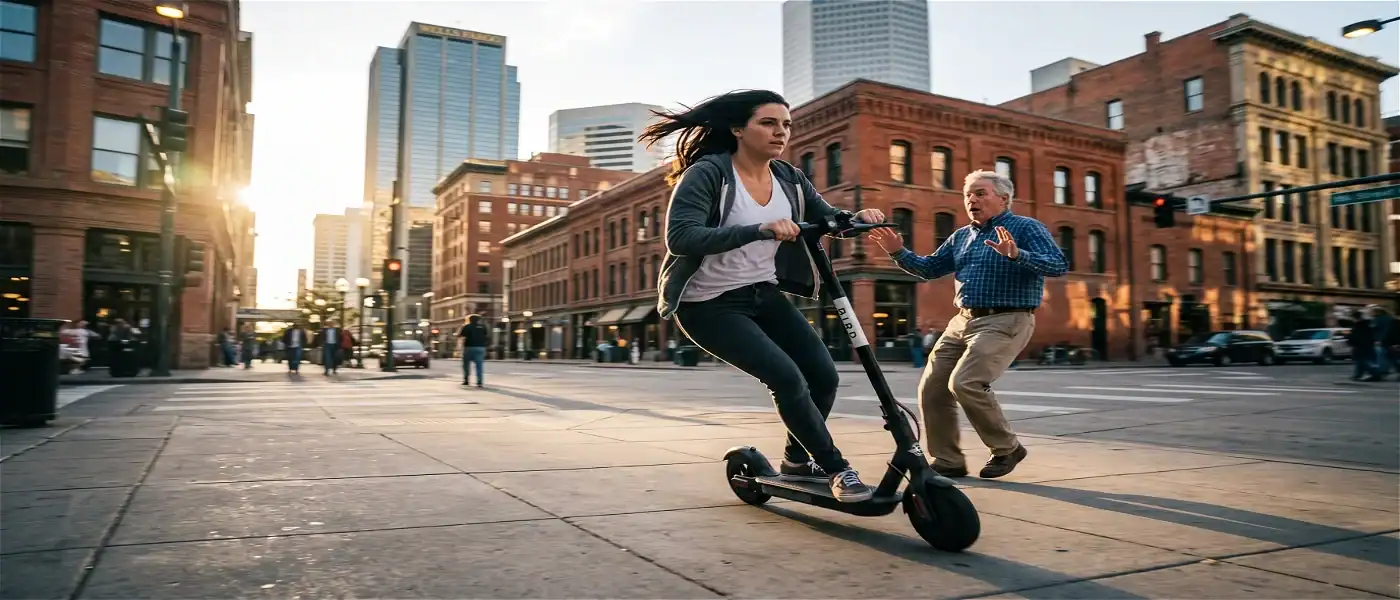
Product defects—think brake failures or mechanical problems—can send someone flying. Parking lots are another trouble spot, especially if there are hidden hazards. And sometimes, it’s a matter of a rider losing control and hitting a pedestrian, especially on busy sidewalks.
Bad weather and poor visibility don’t help. Most crashes seem to happen when traffic is heavy and there’s a lot going on.
Who Is Most at Risk
It’s mostly teens and young adults out there on scooters, since they’re handy for folks who aren’t driving or just want to avoid parking. New riders are at higher risk—handling a scooter at 20 mph isn’t always as easy as it looks.
Not wearing a helmet? Head injuries are much worse if you crash. Riding on busy streets or somewhere you don’t know well ups your odds of an accident. Pedestrians, especially in crowded areas, are at risk of being hit by a rider who’s going too fast or just loses control.
Tourists? They’re often caught off guard by Denver’s traffic and don’t always spot hazards in time.
Key Causes of Electric Scooter Accidents

There’s no single reason e-scooter accidents happen. Sometimes it’s driver negligence, sometimes it’s a busted scooter, and sometimes the road itself is the problem.
Motor Vehicle Collisions
Cars and trucks are probably the biggest danger for scooter riders. Distracted drivers—especially those glued to their phones—often don’t spot scooters in time, whether they’re in traffic or a bike lane. A driver glancing at a text can drift over or miss a scooter in their blind spot.
Speeding and aggressive driving just make things worse. If a motorist is tailgating or flying through lights, they’re not going to react in time to a scooter. Failing to yield, especially when turning or at crosswalks, is another classic cause. And if the driver’s drunk or otherwise impaired, well, that’s a recipe for disaster.
Infrastructure Hazards and Road Defects
Denver’s roads aren’t always scooter-friendly. The scooters themselves are lightweight, so even a small pothole feels huge.
Some common hazards:
- Potholes and cracks
- Uneven pavement or broken concrete
- Debris—gravel, glass, trash
- Missing or busted manhole covers
- Wet or slick spots from rain or spills
Hit one of these at speed and you’re likely going down. The city’s supposed to keep roads safe, so if they ignore a known hazard, they could be on the hook for accidents.
Product Malfunction and Design Defects
Scooter breakdowns cause their share of crashes. Sometimes the software glitches and the scooter stops dead, tossing the rider. If the brakes don’t work, you can’t slow down. Battery issues can mean sudden power loss or, in rare cases, fires. Weak handlebars or flat tires are more common than you’d think.
Rental companies have to keep their fleets in shape, but sometimes damaged scooters end up back on the street. If a crash is traced to a design flaw or a defective part, the manufacturer could be held liable.
Legal Rights After an Electric Scooter Accident
If you’re hurt in a Denver e-scooter accident, you’ve got rights. Colorado law lets you seek money for your medical bills, lost paychecks, and pain and suffering. Figuring out who’s at fault is key—sometimes it’s more than one person or company, and that can change how much you’re able to recover.
Your Right to Compensation
You can go after compensation for pretty much any costs tied to the accident—emergency care, hospital stays, physical therapy, ongoing treatment. If your injuries keep you from working, you can include lost wages.
Pain and suffering is a bit trickier to put a number on, but it covers the physical and emotional fallout from the crash. That Denver study? Typical orthopedic injuries like fractures racked up $8,077 in medical bills alone.
A good electric scooter accident lawyer will help figure out what your claim’s really worth, including future costs you might not have thought about. Property damage—like busted phones or ruined clothes—can be part of your claim too.
Understanding Liability and Fault
There are lots of ways liability shakes out. If a distracted or speeding driver hits you, their car insurance may have to pay. If the city let a dangerous road condition slide, they could be liable. Property owners might be responsible if their lot or sidewalk caused your accident. And if the scooter itself was faulty, the rental company or manufacturer could be on the hook.
A Colorado e-scooter accident lawyer will dig into police reports, check out the scene, and look at maintenance records to figure out everyone who shares blame. The more responsible parties you identify, the better your odds of getting fully compensated.
Comparative Negligence in Colorado
Colorado uses a modified comparative negligence system. Basically, you can still get compensation even if you were partly to blame, as long as you’re less than 50% at fault.
Your payout gets reduced by your share of the blame. So if you’re found 20% responsible, you only get 80% of the money. For a $30,000 claim, that’s $24,000.
Insurance companies love to argue you were mostly at fault—maybe you were going too fast or not paying attention. That’s why having solid evidence—photos, witness statements, maybe even expert opinions—is so important to push back and make sure you get a fair deal.
Navigating Denver and Colorado Regulations
Riding a scooter in Denver means juggling both state laws and city ordinances, which don’t always agree. State law calls these things “low-power scooters” and is relatively relaxed, but Denver’s got its own stricter rules.
Denver City Ordinances on E-Scooters
Denver’s rules are a lot tighter than the state’s. Riding on sidewalks? Not allowed—except when you’re parking. Stick to bike lanes if you can, and stay off pedestrian walkways.
There are also dismount zones—places like the 16th Street Mall and Union Station—where you have to walk the scooter. Tickets for breaking these rules can run from $50 to $150.
Speed is capped at 15 mph in most of Denver, which is lower than the state’s 20 mph limit. Scooters need to be parked in special corrals, not just left anywhere. Enforcement has ramped up lately, especially downtown and in areas with lots of tourists.
State Laws and House Bill 19-1221
Colorado’s House Bill 19-1221 (passed in 2019) set the state’s rules. A low-power scooter has two or three wheels, handlebars, an electric motor under 2,000 watts, and tops out at 20 mph.
State law treats scooters like vehicles, so you’ve got to follow traffic laws. You can ride on roads, bike lanes, and shoulders. Sidewalk riding is technically allowed at 6 mph or less statewide, but Denver (and some other cities) bans it completely.
Scooter riders have the same rights—and responsibilities—as bicyclists. That means obeying lights, stop signs, and yielding when required. You can’t take scooters on highways or limited-access roads.
Helmet, Registration, and Insurance Requirements
You need a valid driver’s license or permit to ride a scooter in Colorado. Under 18? You have to wear a helmet, no exceptions. Adults don’t have to, but if you’re injured without one, insurance companies might try to pay you less.
No registration or special insurance is required by the state, but watch out—most auto policies don’t cover scooter accidents. A lot of riders in Denver find out the hard way that their insurance won’t help after a crash.
Scooters have to have a white front light (visible from 500 feet) and a red rear reflector (visible from 600 feet) if you’re riding at night. Side reflectors are also required. Rental scooters usually come equipped, but if you own your scooter, you’ll need to make sure it’s up to code.
Steps to Take Immediately After an E-Scooter Accident
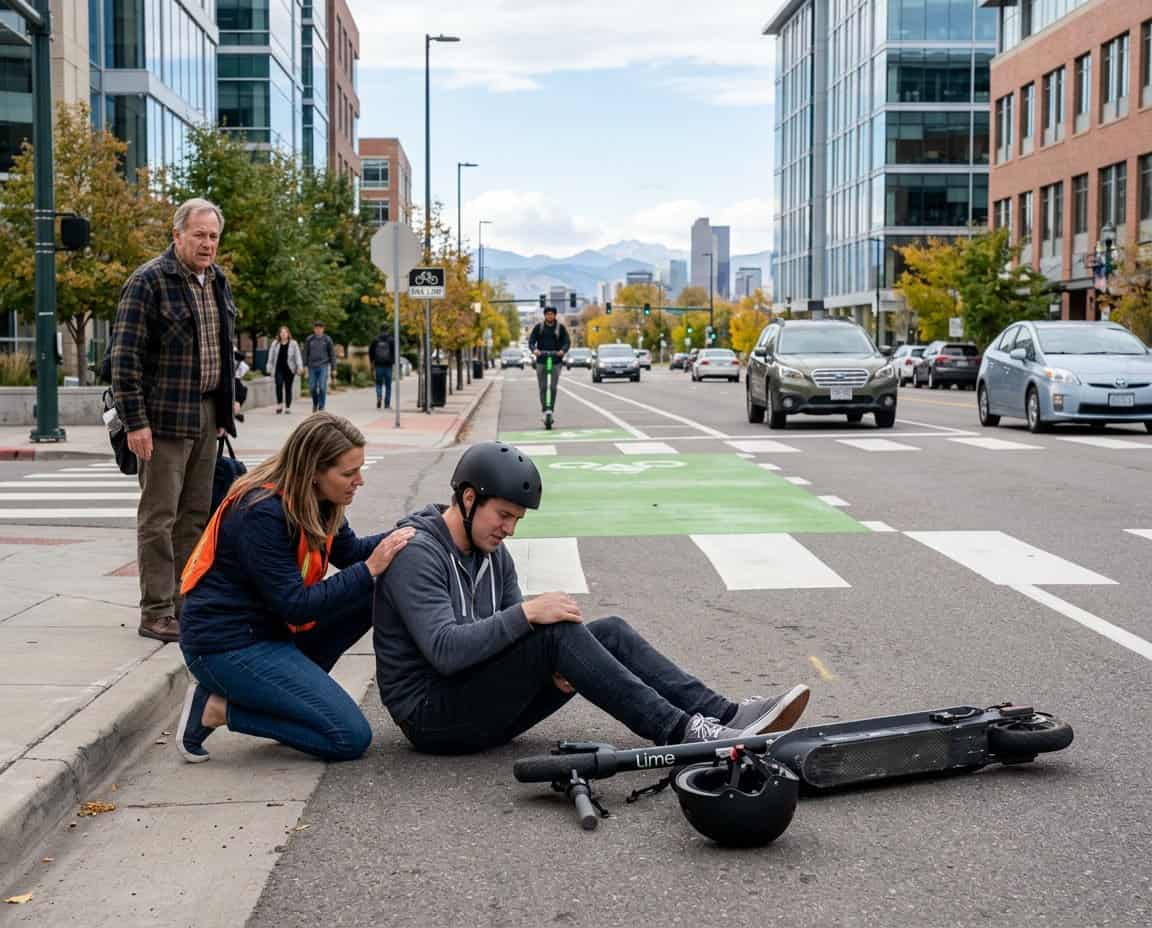
If you’re in an electric scooter accident, what you do next matters. Get medical help, document the scene, and file a police report—these steps lay the groundwork for any claim you might make.
Seeking Medical Attention and Documentation
Getting checked out by a doctor right away is crucial, even if you think you’re just a little banged up. E-scooter injuries can be sneaky—what feels like a bruise might actually be something more serious that shows up later. Head injuries or internal stuff? That can take time to really hit.
If it’s bad, call 911. But honestly, even for what seem like minor scrapes, it’s smart to see a doctor or hit urgent care within a day. That way, there’s a clear medical record linking your injuries to the crash.
Hang on to detailed medical records. That means:
- Emergency room paperwork
- Doctor’s notes
- Imaging like X-rays or CT scans
- Prescription info
- Physical therapy logs
- Every bill and receipt
All this stuff helps prove the accident actually caused your injuries.
Gathering Evidence at the Scene
Photos and videos are your best friend here—memories fade, but images don’t. Snap shots from all angles: the street, signs, traffic lights, potholes, debris, whatever played a role.
Get clear pictures of the scooter, too. Show the damage, the brand, serial numbers, anything that might matter if the scooter itself malfunctioned.
If anyone saw what happened, grab their name and number. Even a short statement from a witness can really help back up your version of events.
Reporting the Accident to the Authorities
Filing a police report isn’t just red tape—it creates an official record. In Denver, you’re actually required to report accidents with injuries or big property damage. If you can, call the police right there at the scene.
That report will capture the basics: date, time, place, what the officer saw, and sometimes statements from witnesses or thoughts on who was at fault.
Don’t forget to let the scooter company know, too. Most rental apps want you to report accidents fast, and it protects your rights under their agreement if there’s a problem with the scooter itself.
How to File a Successful E-Scooter Accident Claim
Filing a claim after an e-scooter crash isn’t just paperwork—it’s a process. You’ll be dealing with legal folks, insurance adjusters, and a bunch of deadlines. Every step matters if you want a fair shot at compensation.
Contacting an E-Scooter Accident Lawyer
Honestly, it’s smart to call an electric scooter accident lawyer as soon as you can. These cases get complicated quickly—sometimes it’s the rental company’s fault, sometimes a car driver, sometimes even the city.
A good lawyer digs into everything: police reports, your medical files, photos, videos, and they’ll talk to witnesses. Sometimes they even bring in crash experts to piece together what really happened.
Here’s what a scooter accident lawyer will usually do:
- Investigate every angle of the crash
- Pinpoint everyone who might be responsible
- Figure out what your injuries and losses are really worth
- Handle all talks with insurance companies
- Make sure all the legal forms get filed on time
Most personal injury lawyers offer free consultations, so you can talk through your case without worrying about a bill. Plus, they usually work on contingency—they only get paid if you win.
Dealing with Insurance Companies
Insurance adjusters move fast—sometimes they’ll call you the same day. They might sound friendly, but their job is to pay out as little as possible. Don’t give a recorded statement or take a settlement without talking to a lawyer.
Adjusters have their tricks: asking questions designed to make it sound like you’re partly to blame, downplaying your injuries, or pushing you to settle before you know how bad things really are.
A lawyer will handle these conversations for you. They know what to say, what not to say, and how to push for the real value of your claim—including stuff like future medical bills or long-term effects the insurance company might ignore.
If you rented the scooter, it gets even messier. There might be several insurance policies in play: the rental company’s, your own, maybe even a driver’s auto insurance. Sorting all that out is not something you want to do alone.
Important Deadlines and the Statute of Limitations
Colorado has strict time limits on these claims. For most injury cases, you’ve got two years from the accident to file a lawsuit. Miss that, and you’re probably out of luck.
If you’re dealing with a government agency—say, the city’s bad road maintenance caused your crash—the deadlines are even tighter. Sometimes you have to file a notice within 90 to 180 days. Don’t wait.
Insurance companies also want reports ASAP. Witnesses disappear, memories fade, and evidence at the scene doesn’t stick around forever.
Getting started early gives your lawyer time to build your case. Wait too long, and you might not have a case at all.
Types of Compensation Available
If you’re hurt in an e-scooter accident, you could be looking at several types of compensation. It’s not just about covering your medical bills—there’s lost income, pain and suffering, and sometimes more.
Medical Expenses and Rehabilitation
Medical bills add up fast. ER visits, hospital stays, surgeries, X-rays, MRIs—it all counts.
And it doesn’t stop there. Physical therapy, follow-up appointments, prescriptions—those costs keep coming, and they should be part of your claim.
Rehab is another big one. Some injuries need months of therapy or special equipment like crutches or wheelchairs. That’s all recoverable.
Don’t forget future medical needs. If you’ll need ongoing care or face complications down the line, those projected costs matter, too.
Lost Wages and Reduced Earning Capacity
Lost wages are pretty straightforward: if you missed work because of your injuries, you should be compensated for that time. This covers doctor appointments, hospital stays, and recovery at home.
To prove it, you’ll want pay stubs, employer letters, or—if you’re self-employed—tax returns and business records.
Reduced earning capacity is a little trickier. If you can’t go back to your old job or have to work less, you might be entitled to more. Maybe you’re forced into a lower-paying job, fewer hours, or can’t climb the career ladder anymore. Sometimes, people have to switch careers entirely.
Figuring out future lost income usually means bringing in experts—vocational specialists or economists—to crunch the numbers.
Pain, Suffering, and Non-Economic Damages
Not everything can be measured in dollars. Pain and suffering covers the actual physical pain and emotional fallout from your injuries.
This stuff matters—a lot. Chronic pain, anxiety about riding again, depression from missing out on life—these are real losses.
There’s also loss of enjoyment: if you can’t play sports, do hobbies, or hang out with friends like you used to, that’s compensable. Scarring or disfigurement that changes how you feel about yourself falls into this category, too.
Colorado doesn’t usually cap non-economic damages, so it really depends on how badly your life’s been impacted.
Choosing the Right Legal Representation in Denver
Picking the right lawyer after a Denver e-scooter crash isn’t as simple as Googling “personal injury attorney.” You want someone who knows the ins and outs of Colorado law and has real experience with scooter accidents.
What to Look for in an Electric Scooter Accident Lawyer
Find someone who’s actually handled e-scooter or micro-mobility cases before. These crashes raise unique questions—traffic laws, product defects, weird insurance coverage issues—it’s not the same as a fender-bender.
Your attorney should know Denver’s e-scooter rules, like where you’re allowed to ride and what speed limits apply. Local knowledge really matters here.
Ask about their track record. Have they won e-scooter cases? Do they understand injuries like broken bones, concussions, or nasty road rash?
A good lawyer will offer a free consultation so you can lay out your story and see if you’re a good fit—without risking your wallet.
Benefits of Local Denver Legal Experts
A Colorado e-scooter accident lawyer actually gets the ins and outs of Denver’s unique ordinances—and, honestly, that can make a real difference in figuring out liability. For example, there are areas where sidewalk riding’s a no-go, and some trails are off-limits, which definitely plays into who’s responsible if there’s a crash.
Local attorneys have a good sense of which insurance companies are active in Colorado and, maybe more importantly, how those companies tend to handle scooter-related claims. That kind of insight can really help when it comes time to negotiate a settlement.
Denver-based lawyers also tend to have built-in relationships with local courts, doctors, and even accident reconstruction folks. Those connections? They can make a case stronger and sometimes just move things along faster.
And let’s be honest—Denver keeps tweaking its scooter rules as more people hop on these things. Local legal experts are usually on top of those changes, tracking what’s new so nothing slips through the cracks.