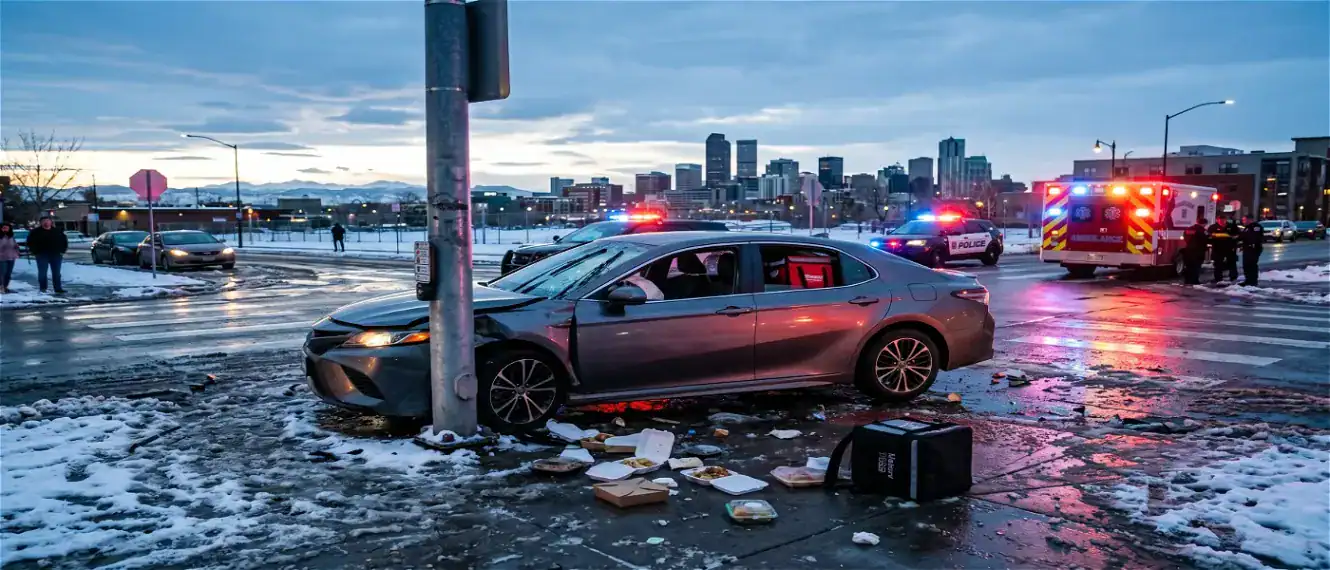
Delivery Driver Accidents in Denver: Who Is Liable When a Gig Worker Hits You?
Delivery drivers are everywhere in Denver. From DoorDash and Amazon Flex to Uber Eats and Instacart, gig workers bring food, packages, and groceries to doorsteps across the city. But when one of these drivers causes a crash, figuring out who pays for your injuries can get complicated fast.
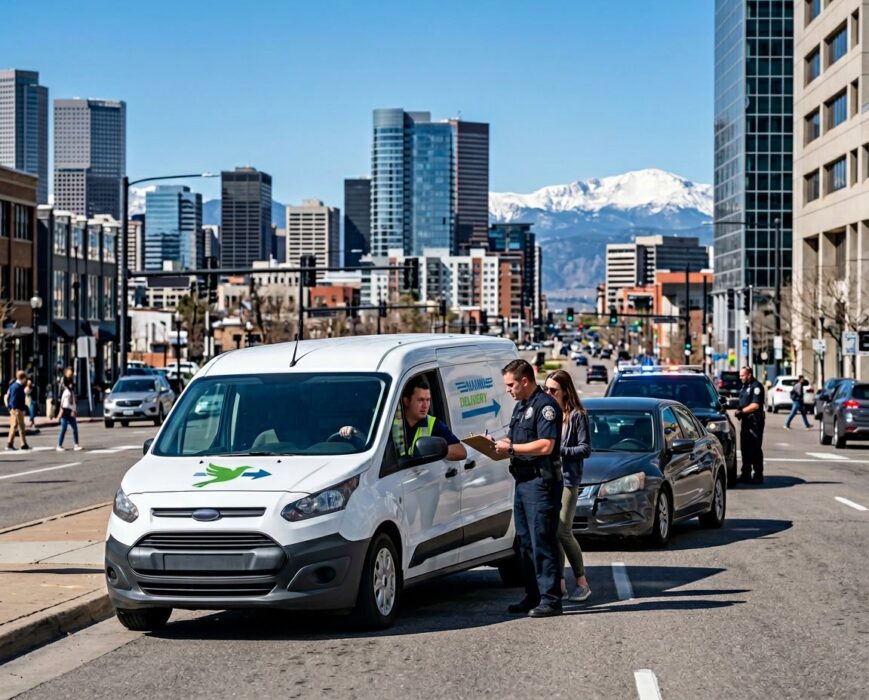
When a gig worker hits you, liability often depends on whether they were actively making a delivery, what kind of insurance coverage applies, and how the company classifies them—as an employee or independent contractor. Unlike crashes with traditional delivery companies like UPS or FedEx, gig economy accidents involve multiple insurance policies, unclear employment relationships, and companies that may try to avoid responsibility.
This article breaks down how liability works in Denver delivery driver accidents. It covers the legal differences between employees and contractors, what insurance may be available, and what steps victims should take to protect their rights and pursue fair compensation.
Understanding Liability in Denver Delivery Driver Accidents
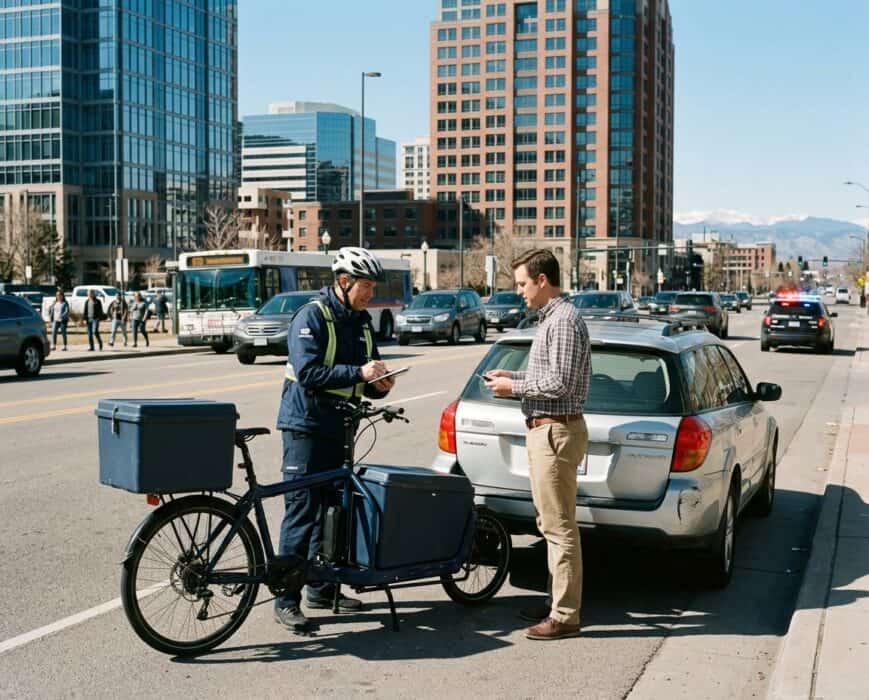
Denver delivery driver accidents often involve questions about who pays for damages—the driver, the company, or both. The answer depends on employment classification, legal principles of employer responsibility, and whether the company’s own actions contributed to the crash.
Employee vs. Independent Contractor Status
The classification of a delivery driver determines which insurance applies and who can be held responsible. Traditional delivery companies like UPS and FedEx typically hire drivers as employees. These workers receive wages, benefits, and direct supervision from the company.
Gig economy platforms like DoorDash, Uber Eats, and Amazon Flex classify their drivers as independent contractors. This distinction shifts liability away from the company in many cases. The driver carries primary responsibility for accidents that occur during deliveries.
Misclassification becomes an issue when companies treat workers like employees but label them as contractors. Colorado law examines factors like who controls work schedules, provides equipment, and sets delivery routes. A driver classified as an independent contractor might actually qualify as an employee under state law. This reclassification can make the company liable for a Denver delivery truck accident.
Vicarious Liability and Respondeat Superior
Respondeat superior holds employers legally responsible for employee actions performed within the scope of employment. When an employee driver causes a crash while making deliveries, the employer typically shares liability. The company’s commercial insurance covers damages even if the driver made a mistake.
This doctrine applies when the driver was working at the time of the accident. A UPS driver running a red light during a scheduled delivery route creates employer liability. The same driver causing an accident while off-duty on personal errands does not.
Independent contractors fall outside respondeat superior protections. Gig platforms argue they only connect customers with drivers rather than employ them. However, some delivery apps provide contingent liability coverage during active deliveries. Victims may still pursue claims against both the driver and the platform depending on insurance gaps.
Direct vs. Indirect Liability
Indirect liability comes through respondeat superior and holds companies responsible for driver mistakes. Direct liability targets the company’s own negligence regardless of who was driving. A delivery company can face direct claims for inadequate driver training, unrealistic delivery quotas, or poor vehicle maintenance.
Pressure to meet delivery deadlines encourages speeding and distracted driving. Companies that track drivers through apps and penalize late deliveries create dangerous conditions. These policies can establish company fault separate from driver error.
Poorly maintained vehicles also create direct liability. Companies must ensure trucks receive regular inspections and repairs. Failed brakes or worn tires that contribute to crashes make the fleet owner directly responsible. Victims can pursue both the driver for causing the accident and the company for neglecting safety obligations.
Employment Classification and Its Impact on Liability
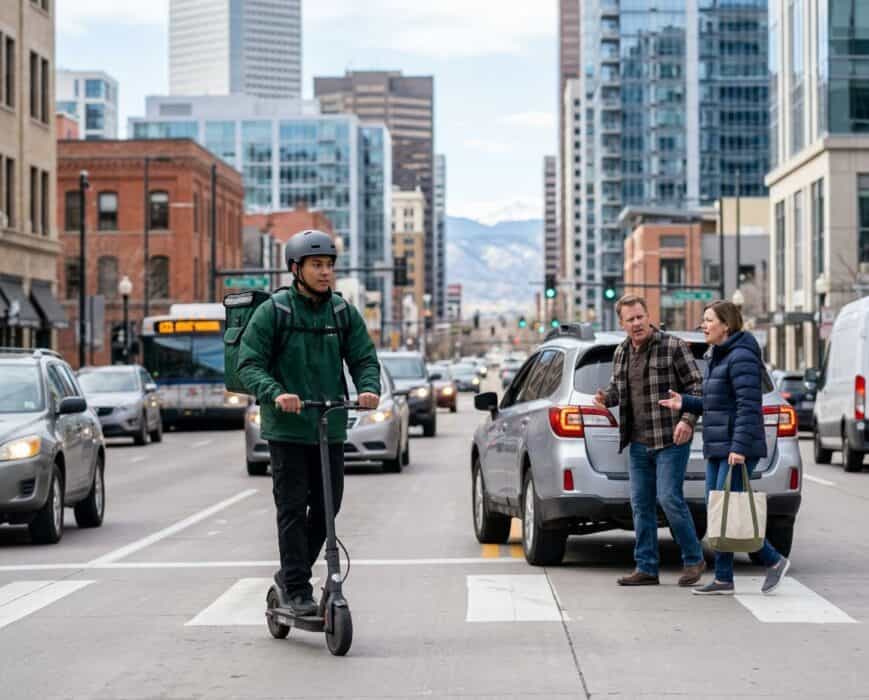
How a delivery driver is classified legally determines which insurance policies apply and whether the company bears automatic responsibility for the crash. The distinction between employee and independent contractor status affects everything from available compensation to which parties can be sued.
Determining Employee or Contractor Status
Courts examine multiple factors when deciding if a driver is an employee or independent contractor. These factors include who controls the driver’s schedule, who sets delivery prices, whether the driver can refuse assignments, and who provides the vehicle and equipment.
A driver who uses their own car, chooses their own hours, and accepts or declines deliveries freely often fits the independent contractor definition. However, companies that control fare rates, assign mandatory deliveries, monitor performance through apps, and enforce disciplinary measures show employee-level control.
The economic dependence test looks at whether the driver depends on one platform for income or works for multiple companies. A driver who relies primarily on one app for earnings may be considered economically dependent, which supports employee classification.
When a driver qualifies as an employee, vicarious liability applies. This legal principle, also known as respondeat superior, makes employers automatically responsible for accidents their employees cause while working. The company’s commercial insurance typically covers these claims.
Legal Challenges to Misclassification
Misclassification lawsuits have increased across the gig economy. A May 2025 federal appeals court ruled that RideFast drivers must be classified as employees because the company controlled pricing, ride assignments, and performance metrics. This decision pressures delivery platforms to reconsider their labor models.
Colorado follows its own tests for worker classification. Companies that misclassify employees as contractors face penalties and must provide back pay, benefits, and insurance coverage. Injured accident victims can challenge a company’s classification in personal injury lawsuits.
Labor advocates argue that many gig companies intentionally misclassify workers to avoid insurance costs and legal liability. These classification disputes directly impact crash victims who may find themselves pursuing claims against drivers with minimal insurance rather than companies with substantial commercial policies.
Joint Venture and Agency Considerations
Some delivery companies operate through contractor agreements with local delivery service partners. Amazon’s Delivery Service Partner (DSP) program creates a network where independent businesses employ drivers and lease Amazon-branded vans. These arrangements raise questions about shared liability.
Courts may find joint employer relationships when both the platform and the contractor company exercise control over drivers. Evidence includes monitoring software, branded uniforms and vehicles, and mandatory training programs.
Agency law allows victims to hold companies liable when they create the appearance that drivers represent the company. Branded vehicles, uniforms, and customer-facing apps all suggest the driver acts as the company’s agent, regardless of the contract terms.
Insurance Coverage After a Delivery Driver Accident
Delivery driver accidents involve multiple insurance policies that may apply depending on the driver’s work status at the time of the crash. Personal auto insurance often excludes commercial activities, while commercial policies typically activate only during specific delivery phases.
Commercial Auto Insurance vs. Personal Auto Insurance
Commercial auto insurance provides coverage when delivery drivers are actively working. These policies typically carry higher limits than personal policies, often $1 million or more. They activate when drivers are logged into their delivery app and engaged in work-related activities.
Personal auto insurance is what most drivers carry for everyday use. These policies exclude coverage for commercial activities like food or package delivery. When a driver is off-duty and not logged into any delivery app, their personal policy becomes the primary coverage source.
The key difference lies in coverage limits and when each policy applies. Commercial policies are designed for business use and provide substantially more protection for accident victims. Personal policies explicitly deny claims when the vehicle is being used for commercial purposes through business-use exclusions.
Coverage Gaps and Policy Limitations
A coverage gap occurs when a delivery driver’s status falls between personal and commercial insurance. Many delivery companies provide contingent liability coverage when drivers are logged into the app but waiting for a delivery request. This coverage typically exceeds personal policy limits but falls short of full commercial auto insurance protection.
The waiting period creates the most significant coverage gap. Drivers may be online and available for deliveries but not actively transporting goods. Some companies offer limited liability coverage during this phase, while others provide none.
Business-use exclusions in personal policies create another major limitation. Nearly all personal auto insurance policies deny claims for accidents occurring during commercial activities. This leaves injured parties navigating between the driver’s insurer who denies the claim and the company’s insurer who may dispute the driver’s work status.
UM/UIM and Additional Coverage Options
UM/UIM coverage protects victims when the at-fault driver lacks sufficient insurance. This coverage applies through the victim’s own auto policy when the delivery driver carries inadequate limits or disputes their work status at the time of the crash.
Uninsured motorist coverage activates when the delivery driver has no applicable insurance. Underinsured motorist coverage fills the gap when available coverage falls short of actual damages. These protections become critical in gig economy accidents where liability disputes are common.
Additional coverage options include medical payments coverage and personal injury protection. These policies pay for immediate medical expenses regardless of fault. They provide faster access to treatment funds while liability questions get resolved between multiple insurance carriers.
Critical Factors Affecting Liability Determination
Several factors influence who pays damages after a gig worker delivery driver causes a crash. The driver’s active status, available digital evidence, and the company’s hiring practices all play major roles in establishing legal responsibility.
Status of the Driver at the Time of Crash
The driver’s status when the accident occurred directly impacts who bears legal responsibility. If a gig worker was actively on a delivery run or en route to pick up an order, the delivery platform may share liability through their contingent insurance coverage. Most platforms like DoorDash, Uber Eats, and Amazon Flex provide commercial insurance that activates only during active deliveries.
When a driver is logged into the app but waiting for an order, coverage often drops to a lower tier or disappears entirely. If the driver was completely offline or using the vehicle for personal reasons, their personal auto insurance becomes the primary coverage source. Many personal policies exclude commercial activities, which can leave injury victims without adequate compensation options.
The exact moment of the crash matters. A driver who finishes a delivery and then causes an accident five minutes later while driving home typically falls outside the company’s insurance umbrella.
Evidence: App Logs and GPS Data
Digital records provide concrete proof of driver status and behavior during a delivery truck accident. App logs show precisely when a driver accepted an order, picked up items, and completed delivery. GPS data reveals the driver’s location, route, and speed at the time of impact.
This evidence helps establish whether the driver was working or off-duty. It can also demonstrate if the driver deviated from the delivery route for personal reasons, which may shift liability away from the platform. Phone records can show if the driver was distracted by app notifications or messaging while driving.
Delivery companies control access to this data. Victims should request this information immediately through an attorney, as companies may delete or withhold records without a legal preservation demand. Time-stamped screenshots, delivery confirmations, and customer communications all strengthen liability claims.
Negligent Hiring, Training, and Supervision
Companies can face direct liability when inadequate hiring practices or training contribute to accidents. Unlike traditional employers, many gig platforms conduct minimal background checks and provide little to no driver training. If a company fails to screen for serious traffic violations or suspends licenses, they may share responsibility for subsequent crashes.
Pressure to meet delivery quotas or face deactivation can push drivers to speed, run red lights, or drive recklessly. Evidence of company policies that encourage dangerous behavior strengthens negligent supervision claims. Some platforms penalize drivers for late deliveries without accounting for traffic or weather conditions in Denver’s mountain terrain.
Poor vehicle maintenance requirements also factor into liability. When platforms allow drivers to use unsafe vehicles without regular inspections, they create foreseeable risks that support negligence claims against the company itself.
Common Scenarios and Examples in Denver
Denver’s busy streets see delivery vehicles at all hours, and accidents happen in patterns that depend on who employs the driver and what they were doing at the time of impact. Liability shifts based on whether a major carrier or gig app was involved, and sometimes multiple parties share responsibility.
Delivery Truck Accidents Involving Major Carriers
UPS, FedEx, and Amazon delivery trucks are a constant presence in Denver neighborhoods and business areas. When these drivers cause accidents while on the job, their employers usually have commercial insurance to handle liability. Sometimes a crash is as simple as a truck backing into a parked car, other times it’s a driver running a red light in a rush to finish a delivery route.
Most of these companies hire drivers as employees, not contractors. That means the company itself is generally on the hook for what happens during work hours. Medical expenses, car repairs, and lost wages are typically paid out through the company’s commercial insurance.
A delivery truck accident lawyer can dig into whether the driver was actually working at the time. If the driver was on a break or using the vehicle for something personal, the responsibility might fall on them alone. Commercial insurance almost always has higher limits than regular auto policies.
Gig Worker Accidents with Apps like DoorDash and Uber Eats
Gig drivers—think DoorDash, Uber Eats, Instacart—are independent contractors. The companies set it up that way to keep their own liability down. Whether the company is responsible for an accident depends on if the driver was actively delivering at the time.
Most of these apps have insurance that only kicks in when a driver is on an active delivery—so if they haven’t accepted an order, or they’re between jobs, their own insurance has to cover accidents. The catch? Many personal policies don’t cover accidents that happen while working, which can make things tricky for victims hoping to recover damages.
A truck accident lawyer will need to confirm the driver’s status at the moment of the crash, usually by checking app records and timestamps. If the driver wasn’t on a delivery, the app company is off the hook. And let’s be honest—Denver winters don’t make things easier. Gig drivers often aren’t trained for snow and ice, which just adds to the risk.
Multi-Party and Third-Party Liability Cases
Sometimes, it’s not just the driver or their employer at fault. A poorly maintained vehicle might put blame on whoever owns or services the truck. If a faulty part caused the crash, the manufacturer could be responsible too.
Other times, outside parties play a role. Maybe a property owner let hedges grow so tall they blocked a driver’s view at an intersection. Or maybe a road construction crew left hazards unmarked, or a loading company failed to secure cargo and it shifted during transit.
A solid accident investigation should look at every angle. Insurance companies love to spread out blame to limit what they pay. Finding everyone who played a part is key to making sure victims actually get compensated—even if one policy isn’t enough.
Steps to Take After Being Hit by a Delivery Driver
If you get hit by a delivery driver, what you do right after can really affect your health and your rights. Gathering evidence, reporting the accident, and knowing when to call a lawyer are all pretty important if you want a fair shot at compensation.
Preserving and Gathering Evidence
Right after an accident, you’re probably shaken up, but those moments are huge for building your case. Call 911—get medical help and make sure there’s an official police report. Even if you feel fine, see a doctor. Some injuries show up later, and having records helps.
Snap photos of everything—your car, the other vehicle, injuries, skid marks, road conditions, traffic signs, even the delivery truck’s logos and plates.
Get the driver’s name, phone, and insurance. Ask who they work for and whether they were “on the clock.” If there are witnesses, grab their contact info too.
Hang onto anything that got damaged—clothes, bags, you name it. And keep every bill, repair estimate, and note about missed work.
Reporting the Accident and Notifying Insurers
Let your own insurance company know about the crash within a day if you can. Just stick to the facts—don’t admit fault or guess what happened.
Try to confirm if the delivery driver works for a big company like UPS, FedEx, Amazon, or is using an app like DoorDash or Uber Eats. The company should be told about the accident, but don’t expect them to jump at taking responsibility.
Be wary of any quick settlement offers. Insurance companies usually start with a lowball number before you know how bad your injuries really are. Keep detailed notes on every conversation with insurance adjusters—dates, times, what was said.
When to Contact a Personal Injury Attorney
Accidents with delivery drivers can get complicated fast—who’s responsible, which insurance applies, and so on. A Denver delivery truck accident lawyer can help track down every possible source of compensation and deal with all the insurance companies.
It’s probably time to call a personal injury attorney if you’re dealing with serious injuries, big medical bills, or missed work. If the company tries to dodge responsibility or says the driver’s just a contractor, legal help is even more important.
Most lawyers in this field offer free consultations and don’t get paid unless you win. They’ll jump in right away—gathering evidence, dealing with paperwork, and letting you focus on getting better.
Pursuing Compensation and Your Legal Rights
After a delivery driver accident, you’re entitled to various types of damages, but insurers don’t exactly make things easy. That’s where a personal injury attorney comes in—helping you cut through the mess and get what you deserve.
Available Damages in Delivery Driver Accident Claims
Victims of delivery driver accidents can seek compensation for both economic and non-economic losses. Economic damages cover stuff like ER visits, surgeries, therapy, ongoing care, and lost wages if you can’t work. Reduced earning capacity counts too if your injuries are long-term.
Non-economic damages? That’s pain and suffering, emotional distress, and any hit to your quality of life. It’s not as easy to put a number on, but it’s real.
You can also claim property damage for your car and anything else that got wrecked. Sometimes, if the driver or company was especially reckless, punitive damages might be on the table.
Challenges Victims Face with Insurance Companies
Insurance companies are pros at minimizing what they pay out. They’ll argue the driver was a contractor, or off duty, or that some other policy should cover things.
It’s pretty common for them to toss out a quick, low settlement before you even know what your long-term medical needs will be. These offers almost never cover everything.
If there are multiple policies—personal, company, contingent—it can get messy. Insurers might point fingers at each other or flat-out deny coverage.
Without a lawyer, it’s tough to find all the parties at fault and every available insurance source. Companies might even drag their feet on investigations or refuse to hand over key evidence like delivery logs or maintenance records.
Role of a Personal Injury Lawyer in Delivery Driver Cases
A delivery truck accident lawyer gets to work figuring out who’s responsible and which insurance policies are in play. They’ll gather police reports, witness statements, delivery app records, and maintenance logs—whatever it takes.
Denver delivery truck accident lawyers know the ins and outs of Colorado traffic laws and the local courts. They’ll negotiate with insurance companies and push for a settlement that actually covers your losses.
If the insurance companies won’t play ball, a personal injury lawyer can take the case to court. They’ll handle all the legal filings, deadlines, and appearances so you don’t have to stress about it.
A personal injury attorney also works with doctors and specialists to document your injuries and estimate future medical costs. Their job is to make sure you don’t settle for less than you deserve. And again, most work on contingency—if you don’t get paid, neither do they.
Denver Delivery Truck Accident Trends and Special Considerations
Denver’s seen more than 1,200 commercial vehicle accidents in just six months of 2025. With gig drivers and delivery vans everywhere, the city’s crash patterns are shifting, and local road quirks just add to the risks.
Accident Patterns Involving Gig Drivers
Gig workers are under serious time pressure, which leads to some predictable (and pretty frustrating) crash scenarios. They’re glued to apps and GPS, which means distraction-related accidents are a problem, especially on busy stretches like I-25 or I-70.
You’ll see sudden stops in neighborhoods as drivers hunt for the right address. Double-parking and blocking bike lanes just to make a quick delivery? Happens all the time, and it puts everyone else—especially cyclists and motorcyclists—at risk.
Amazon vans, grocery delivery cars, and all sorts of independent contractors are racing through intersections to hit their quotas. Denver County had 712 truck-involved crashes, a lot of them tied to last-mile delivery. The explosion in gig work means a lot of inexperienced drivers are behind the wheel of commercial vehicles with zero formal training.
Safety Risks Unique to Denver’s Roadways
Denver’s downtown is packed with narrow streets and unpredictable weather, which makes life tough for delivery drivers. Big trucks and vans have to squeeze through tight spaces, dodging pedestrians, cyclists, and rush-hour traffic.
The city’s bike lanes are great—unless a delivery driver swings wide or throws open a door without looking. Add in mountain weather that can dump snow or ice with little warning, and suddenly stopping a loaded delivery truck gets dicey.
In residential neighborhoods, parking is so limited that drivers often have to back into alleys or driveways where they can’t see much. Denver’s grid and one-way streets can confuse drivers who rely too much on their GPS. High-traffic areas see delivery vans darting across lanes to snag a loading zone or avoid missing an exit—it’s not exactly a recipe for safe driving.
Recent Legal Developments Affecting Liability
Colorado law says delivery companies have to keep up proper insurance for their commercial vehicles. Lately, some cases have shown that employers might be on the hook for negligent hiring or training of gig workers, even if those drivers are technically independent contractors.
Courts are starting to look closely at whether companies set delivery quotas that basically push drivers to take risks. Stuff like electronic driving logs and telematics data can suddenly become key evidence. Victims generally get three years to file personal injury claims, though that deadline isn’t set in stone—it can shift depending on the details.
Insurance disputes are popping up more often as gig companies look for ways to classify workers that limit their own liability.