Colorado’s Increased Penalties for Distracted Driving in 2025
Colorado drivers are looking at much stricter rules about phone use behind the wheel in 2025. The state’s hands-free law kicked in on January 1, 2025, and police have wasted no time handing out tickets. First offense? That’s a $75 fine and two points on your license. Mess up again, and the penalties climb.
This new law doesn’t just ban texting anymore—it says you can’t hold or manually use your phone for anything while driving. No more making calls by hand, checking directions, or fiddling with apps. You’ve got to use hands-free gear like Bluetooth or a phone mount.
Early numbers are already showing an impact. Citations for distracted driving jumped 135% in the first quarter of 2025 compared to the same time in 2024. So, what exactly is off-limits? Who does this law cover? What are the real penalties, and how can you keep yourself out of trouble? Let’s break it down.
Overview of Colorado’s 2025 Distracted Driving Law
As of January 1, 2025, Colorado’s hands-free law makes it illegal for drivers to hold or manually use mobile devices while driving. If you need to use your phone, it has to be hands-free—no exceptions.
Key Changes Introduced by the Hands-Free Law
This law is a pretty big shift from what Colorado drivers were used to. Before, you could get away with holding your phone for some things. Now? Not at all. If you’re behind the wheel, you can’t touch your phone, period.
You have to use hands-free gear—Bluetooth, mounts, whatever works for you. This push came after the Department of Transportation noticed a 9% spike in cellphone use while driving from 2022 to 2024.
It’s not hard to see why they’re cracking down. Back in 2020, distracted drivers were behind 10,166 crashes in Colorado, leading to 1,476 injuries and 68 deaths. Surveys showed over 90% of drivers admitted to being distracted at least sometimes. That’s a lot of risk on the road.
Effective Date and Applicable Drivers
The law took effect January 1, 2025, and it covers everyone driving in Colorado—locals, out-of-staters, doesn’t matter how old you are or how long you’ve been driving.
State agencies spent months warning folks about the new rules. Still, in just the first few weeks, officers handed out 94 tickets for distracted driving—a 135% jump over last year.
Main Prohibited Behaviors Under the Law
Here’s what you can’t do: hold your phone for any reason while driving. That means:
- Holding a phone to make or answer calls
- Texting or reading any kind of messages
- Watching videos
- Taking photos or recording video
- Browsing social media
- Using apps that need manual input
You can still use your phone if it’s hands-free. Voice commands and single-touch features are OK, and of course, you can always call 911 in an emergency—even if you don’t have hands-free gear.
First offense gets you a $75 fine and two points. Repeat it, and things get more expensive (and riskier for your license).
Specific Offenses and Restricted Activities
Colorado’s hands-free law spells out exactly what you can’t do with your phone while driving. It’s not just about texting anymore—any manual interaction is off-limits, even at a stoplight.
Banned Use of Handheld Devices
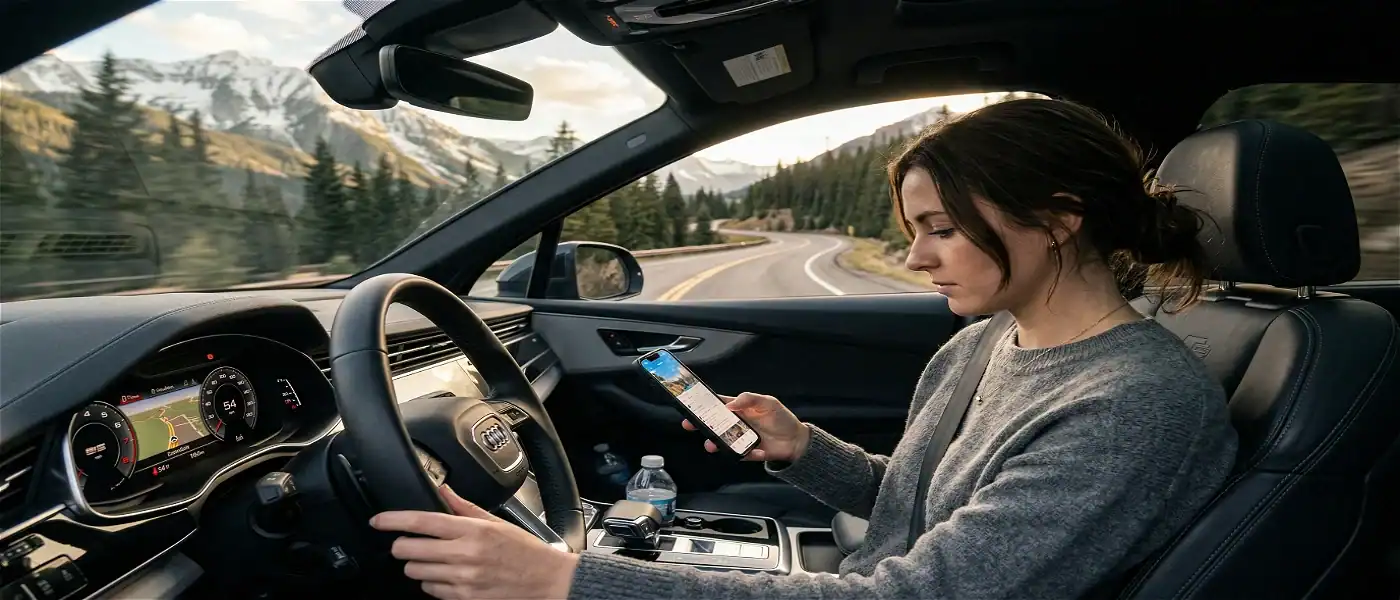
You can’t hold your phone for any reason. Putting it on speaker and holding it? Still a violation. Even dialing a number by hand is out. If you’re stopped at a red light or stuck in traffic, the law still applies. Only exception: if you’re legally parked.
Specifically banned:
- Holding a phone to make or answer calls
- Gripping a device on speaker mode
- Manually entering phone numbers or contacts
- Holding a phone to look at anything
If you need to make a call, use Bluetooth, a mounted phone with voice controls, or your car’s built-in system. First responders and people calling 911 in emergencies are the only ones off the hook here.
Texting, Social Media, and Entertainment Restrictions
Texting while driving? Absolutely banned. That goes for messaging apps, email, and anything on social media.
No checking Facebook or Instagram, no reading posts, no scrolling, no snapping photos or recording while behind the wheel.
Not allowed:
- Sending or reading any messages
- Checking email or instant messages
- Browsing social feeds
- Taking photos or video
- Playing games
- Watching or streaming videos
Doesn’t matter if you’re stopped at a light—the law only lets you use your phone normally if you’re legally parked.
GPS, Music, and Other Interactive Controls
You can use GPS, but you can’t touch your phone to mess with it while driving. All changes need to be set before you start moving, or done with voice commands.
Same goes for music and podcasts. No picking up your phone to skip songs, change volume, or browse playlists. Use voice commands, steering wheel buttons, or ask your passenger.
What works:
- Voice-activated GPS (Siri, Google Assistant, etc.)
- Mounted phones with the destination set before driving
- Built-in car navigation systems
- Voice commands for music
If you touch your mounted phone to adjust GPS or music, that’s a violation. The phone needs to stay put, and you should stick to voice controls or car buttons while driving.
Legal Penalties and Consequences of Violations
Colorado’s hands-free law brings real consequences. Fines and license points go up fast if you keep breaking the rules. First-timers have a way out, though, if they act quickly.
Fine Amounts and License Points
Get caught the first time and it’s a $75 fine plus two points on your license. The points stick around and can add up to a suspension if you rack up too many. Insurance companies notice, too—expect higher rates if you get dinged.
Doesn’t matter if you’re moving, stopped at a light, or just sitting in traffic—if an officer sees you with your phone in hand, you can get ticketed.
Escalating Consequences for Repeat Offenders
If you keep breaking the law, the fines jump higher. Each new violation adds more points to your license. Stack up enough points, and you could lose your license, especially if you’ve got other tickets.
No second chances after your first ticket—if you get caught again, you pay the fine and take the points. Buying a hands-free device after the fact won’t help you next time.
Dismissal Option for First-Time Offenders
If it’s your first ticket, you can get it dismissed by showing proof you bought a hands-free device—like a Bluetooth headset or a phone mount. Just bring the receipt to court or wherever you’re supposed to handle the citation.
But that’s a one-time deal. Get caught again, and you’re out of luck—no more dismissals for buying gear after the fact.
Exemptions and Special Circumstances
There are a few carve-outs in the law for emergencies and certain workers.
Emergency and First Responder Exceptions
If you need to call 911 or report an emergency, you can use your phone by hand. Same goes for police, firefighters, and EMTs doing their jobs.
Even then, you’re supposed to be careful. If you can, pull over before making that emergency call. Public safety comes first, but the law wants drivers to avoid risky behavior whenever possible.
Parked Vehicles and Utility Worker Provisions
If you’re legally parked—meaning off the road in a real parking spot—you can use your phone however you want.
A few things to remember:
- Stopped at a red light or in traffic? Still counts as driving.
- Parked = off the roadway, in a designated spot.
- Pulled over on the shoulder? That doesn’t count as parked.
Utility workers get a pass if they’re using their phones for work while driving company vehicles. The law recognizes they sometimes need to coordinate on the fly.
Impact and Effectiveness of the New Penalties
So, what’s changed since the law went live? Tickets are way up, and there are early signs it’s making the roads safer.
Increase in Distracted Driving Citations
Cops wrote 94 distracted driving tickets in just the first quarter of 2025. That’s a 135% jump from the same period last year.
The State Patrol is making this a priority. With the new law, officers have clearer authority to pull people over if they see anyone messing with a phone.
That first ticket is a $75 fine and two points—but keep racking up violations, and things get expensive fast.
Statistics on Crashes and Injuries
The Department of Transportation says cellphone use while driving dropped 3.3% since the law started. That might not sound huge, but it’s already prevented an estimated 88 crashes and 49 injuries in just a few months.
Over the last five years, distracted driving was involved in more than 700 deaths and 15,000 crashes statewide. This law is trying to put a dent in those numbers—finally.
Behavioral Trends Among Colorado Drivers
Before all this, 77% of Colorado drivers admitted they’d used their phones behind the wheel. Now, more people are picking up hands-free gear—Bluetooth, mounts, you name it.
The State Patrol keeps hammering the point: drive distraction-free, period. Compliance is trending up as people get the message (and maybe see their friends get ticketed).
Hands-Free Technology and Compliance
Colorado drivers now have to use hands-free tech for any phone use while driving. No more excuses.
Recommended Hands-Free Accessories
Dash and phone mounts are probably the easiest solution. They keep your phone in sight and let you use navigation or calls without holding it. You can stick them on your windshield, dash, or air vent—whatever works for your car.
Apple CarPlay and Android Auto are solid options if your car supports them. They let you control your phone with voice commands or the car’s touchscreen. Newer cars usually have these built in, but you can add them to older rides too.
Bluetooth headsets and car speaker systems are also handy for calls. If your car doesn’t have Bluetooth, plug-in adapters are cheap and easy to set up. Heads up: Colorado doesn’t let you wear headphones or earbuds in both ears while driving—stick to single-ear headsets or use your car’s speakers instead.
How to Set Up Your Vehicle Legally
Phone mounts need to be placed where they won’t block your view of the road—pretty straightforward, right? Make sure the mount actually holds your phone tight enough so it doesn’t go flying if you brake hard or take a sharp corner. Cup holders? Not gonna cut it. Phones can tumble out or slide around too easily if you just toss them in there.
Bluetooth setup is best done before you even start driving. Pair your phone with your car’s system while parked, and double-check that everything connects like it should. Once you’re rolling, anything you need to do—calls, maps, music—should be handled with voice commands or a single tap. No fiddling around while the car’s moving.
Handling your phone while driving is off-limits, even if you’re just sitting at a red light or stuck in traffic. If you get caught for the first time and get a $75 ticket, you might be able to get it dismissed by showing you’ve bought a hands-free device.
Safe Driving Habits for Preventing Distracted Driving
A few changes to your routine before and during your drive can really help you keep your eyes (and mind) on the road.
Planning Ahead Before Driving
Get all your phone stuff sorted before you pull out of the driveway. That means plugging in your GPS address, queuing up your playlist, and making any calls you need to while you’re still parked.
The Colorado Department of Transportation says it’s smart to handle your navigation and vehicle settings before you hit the road. Pick your route while you’re still in park. And when it comes to phone mounts, just make sure they’re not blocking your view.
Anything you might need—sunglasses, coffee, toll money—should be within reach before you start driving. If you’re hungry, eat before you leave or wait until you get where you’re going. The less you have to dig around for stuff, the better.
Minimizing In-Car Distractions
Put your phone on silent, or just stash it in the glove box if you know you’ll be tempted. If you’re using a hands-free setup, get it ready before you start moving.
Some distractions to watch out for:
- Eating or drinking behind the wheel
- Constantly fiddling with the radio or AC
- Dealing with pets or kids
- Reading messages or emails
- Watching videos or snapping photos
CDOT points to eating, texting, and talking on the phone as big culprits for distracted driving. If you really need to check your phone or handle something urgent, pull over somewhere safe. Even if you’re just stopped at a light, messing with your phone isn’t allowed under Colorado’s hands-free law.
Encouraging Safe Driving Among Passengers
Passengers can actually help keep drivers focused. They can take care of directions, pick the music, or answer calls so the driver doesn’t have to.
If you’re traveling with kids, make sure they’re buckled in and have something to keep them busy before you leave. If you notice the driver getting distracted, say something. Sometimes, just offering to drive if the main driver is too tired or preoccupied can make a difference.
And please—don’t wave your phone or try to show the driver a funny video while they’re behind the wheel.
Resources and Ongoing Public Safety Campaigns
Colorado’s got plenty of resources and programs to help folks stay on top of distracted driving laws. CDOT leads most of the efforts, but there are national groups pitching in too.
CDOT Programs and Initiatives
The Colorado Department of Transportation runs the Shift into Safe campaign, which is their main traffic safety push. The idea? Get people to actually think about paying attention every single time they drive. The campaign’s everywhere—social media, ads, you name it—and it’s got a Colorado vibe.
There’s also the “Drop the Distraction” campaign, which zeroes in on distracted driving prevention. It’s all about making people aware of how risky it is to drive while distracted and reminding them to follow traffic laws. The message? Silence your phone, set your navigation before you leave, and pull over if you really need to use your device.
If you want the nitty-gritty details, CDOT has a Hands-Free Information and Resources Page on its website with everything you need to know about Colorado’s hands-free law that started January 1, 2025.
National Highway Traffic Safety Resources
The National Highway Traffic Safety Administration has a pretty thorough Distracted Driving page. If you’re curious about the nationwide push to curb distracted driving, this is a solid place to start. NHTSA actually points out that texting behind the wheel is even riskier than driving drunk—by a factor of six, which is honestly pretty wild.
Stats from the agency show distracted driving led to 3,142 deaths in 2019 and left around 400,000 people injured. And it’s not just about phones—distracted driving covers a bunch of things, like eating, chatting with passengers, or even watching videos.