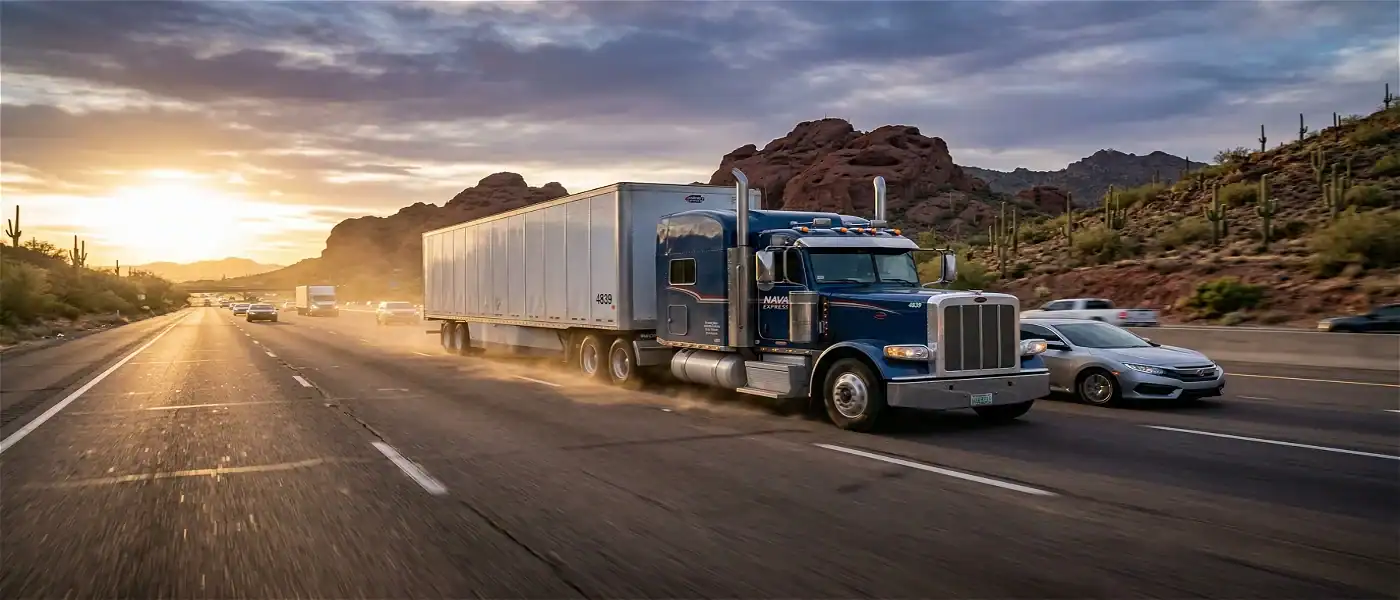
Blind Spot Truck Accidents in Phoenix
Large commercial trucks have significant blind spots that make it tough for drivers to see nearby vehicles. When cars or motorcycles slip into these areas, the truck driver might not notice them before changing lanes or turning. These accidents can lead to serious injuries, simply due to the sheer size difference between trucks and passenger vehicles.
Figuring out who’s responsible for a blind spot truck accident in Phoenix means looking closely at the driver’s actions, the trucking company’s habits, and whether anyone bothered with basic safety steps. Truck drivers are supposed to check their mirrors and take extra care with blind spots. Companies should train drivers and keep their vehicles in good shape. When these basics get ignored, victims have every right to seek compensation.
Understanding how liability works in these crashes is key for accident victims trying to protect their rights. The process usually involves digging up evidence—driver logs, electronic data, maintenance records, you name it. Sometimes, it’s not just the driver; the trucking company and other parties involved in the truck’s operation might share the blame.
Understanding Blind Spots in Large Commercial Vehicles
Big trucks have way larger blind spots than your average car. These “no zones” are dangerous—other vehicles can totally disappear from a truck driver’s view. That’s a big reason for so many accidents, especially during lane changes and turns.
Defining Truck Blind Spots and the ‘No Zone’
Truck blind spots are those areas around a commercial vehicle where the driver just can’t see what’s going on—other vehicles, pedestrians, cyclists, all hidden. Even with well-adjusted mirrors, these zones stick around.
There are four main blind spots on a truck. Up front, there’s a blind spot that stretches about 20 feet from the cab. Out back, it’s around 200 feet behind the trailer. The left-side blind spot covers about a lane, while the right side is the worst—sometimes spanning two or more lanes.
Traffic safety folks call these “no zones” for a reason. A whole sedan can vanish in these spaces. The sheer size of semi-trucks makes these blind spots unavoidable, even with big side mirrors and a driver doing their best.
How Truck Blind Spots Contribute to Accidents
Most blind spot truck accidents happen when drivers try to change lanes or merge and don’t see vehicles hiding in their no zones. A truck driver might check the mirrors, think it’s clear, and then sideswipe a car that’s been there all along.
The right-side blind spot is notorious. When a truck moves right, vehicles in adjacent lanes might get hit with zero warning. Rear blind spots come into play when trucks slow down or stop and the driver can’t see who’s following.
Front blind spots are a problem when cars cut in front too quickly. If the truck driver loses sight of that car and it brakes, there’s no time to react. A lot of drivers don’t realize just how big these no zones are—or how invisible they really become to a truck driver.
Common Types of Blind Spot Truck Collisions
Lane change accidents happen when trucks merge into lanes that aren’t actually empty. Sometimes, the driver checks the mirrors but still misses a car in the no zone, and the result can be ugly—smaller vehicles get forced off the road or into other lanes.
Right-turn crashes pop up a lot at intersections. Trucks swing wide, and anything or anyone on the right side can get hit. That right-side blind spot is a real hazard for folks stuck alongside the trailer.
Merging accidents are pretty common when trucks are getting onto highways or changing lanes on multi-lane roads. Cars speeding up in adjacent lanes might sit in the blind spot at the worst possible moment.
Backing accidents—well, the rear blind spot is massive. Pedestrians, cyclists, even stopped vehicles behind the truck can be totally hidden, backup cameras or not.
Why Blind Spot Truck Accidents Are So Dangerous
Blind spot truck accidents are often devastating because, let’s face it, a commercial truck packs way more punch than a passenger car. The impact is sudden, and victims usually have almost no time to react or escape.
Severity of Injuries in Blind Spot Accidents
These crashes tend to involve side impacts, which are brutal—there’s not much in the way of crumple zones on the sides of cars. The passenger compartment takes the hit.
People often suffer traumatic brain injuries from the side force. Spinal cord injuries happen when the body twists awkwardly. Broken ribs and chest injuries are all too common.
Internal bleeding is a big risk here. The force can damage organs even if there aren’t any obvious wounds. Sometimes victims don’t even realize how badly they’re hurt until later.
Injuries usually show up on the side that got hit. That can mean severe orthopedic damage—sometimes requiring surgery. Pelvic fractures, leg injuries, and in some cases, permanent loss of mobility.
Unique Hazards on Phoenix Roadways
Phoenix highways have their own quirks that make blind spot accidents more likely. Interstate 10 and Loop 101 are packed with truck traffic, especially through the city. Lane changes come fast and often.
The heat messes with visibility too. Glare from the sun can create new blind spots beyond what the truck itself causes. Heat waves off the pavement can distort what drivers see.
Construction zones? They’re everywhere in Phoenix. Trucks have to squeeze through narrow lanes, and the already-bad blind spots get even worse.
And during rush hour, it’s a mess. Cars spend more time lingering in truck blind zones, and stop-and-go traffic just raises the odds that someone’s going to be in the wrong place at the wrong time.
Factors That Increase the Risk
Driver fatigue is a huge issue. Tired truck drivers might skip mirror checks or just zone out. When companies push drivers past legal hours, the risk goes way up.
Badly adjusted mirrors make things worse. Some companies don’t bother enforcing mirror checks or installing extra safety gear like blind spot cameras.
Distracted driving is another killer. If a truck driver’s messing with a phone or something else, they’re not watching their blind spots. Even a quick distraction can be enough.
Truck accidents tied to blind spots spike during rush hour and at night. Darkness makes it even tougher to spot vehicles in nearby lanes.
Key Causes of Blind Spot Truck Accidents
Both truck drivers and other motorists play a part in blind spot crashes. Sometimes it’s bad driving, sometimes it’s equipment issues, and weather can make things even hairier.
Driver Negligence and Inadequate Checks
Truck drivers who don’t check blind spots before changing lanes or turning put everyone at risk. They’re trained to know where these blind spots are, but training only works if you use it.
Some common forms of driver negligence:
- Not adjusting mirrors before hitting the road
- Skipping the shoulder check when changing lanes
- Making sudden lane changes without signaling
- Getting distracted by phones or gadgets
- Driving tired or impaired
Passenger vehicle drivers aren’t off the hook either. Some hang out in a truck’s blind spot too long or cut off trucks without leaving enough space. The biggest blind spot runs from the passenger side door across two lanes.
Poor Visibility and Weather Conditions
Night driving is rough—37% of fatal truck crashes happen between 6 pm and 6 am, when it’s hardest to see.
Rain, fog, and Phoenix dust storms make things even worse. The already-huge blind spots basically double in danger. Sometimes the driver just can’t see a car until it’s way too late.
Sun glare, especially in the morning or evening, makes checking mirrors tricky too.
Vehicle Design and Equipment Failure
Big trucks have bigger blind spots, plain and simple. The cab sits high, making a blind spot right in front and below. The long trailer means massive blind spots on both sides and out back.
If mirrors are broken or out of alignment, the problem gets worse. Older trucks might not have blind spot detection systems or other modern safety tech that could help.
Establishing Liability in Phoenix Blind Spot Truck Accidents
Sorting out who’s legally responsible for a blind spot truck accident isn’t always straightforward. Arizona’s comparative negligence laws add even more wrinkles.
Identifying Liable Parties: Drivers, Companies, and More
The truck driver usually holds most of the blame in blind spot accidents. If they skip mirror checks, don’t signal, or ignore blind zones, that’s on them. They’re supposed to be trained for this stuff.
Trucking companies can also be on the hook. They’re expected to hire good drivers, provide training, and not push people to cut corners. If they rush drivers or ignore safety, they’re part of the problem.
Sometimes, third parties get dragged in. If a maintenance crew messes up a mirror adjustment or skips fixing a visibility system, they might share blame. Other drivers who linger in blind spots or drive unpredictably can also be partly at fault.
A good truck accident attorney will look at all potential liable parties. That way, victims have a shot at full compensation.
Role of Employer and Manufacturer Liability
Trucking companies have responsibilities that go beyond just their drivers. They’re supposed to install blind spot monitoring systems and keep mirrors in good shape. If they skip safety tech or don’t do inspections, they can be sued directly.
If companies push drivers past their legal hours, they’re creating tired drivers—never a good thing. Hiring drivers with sketchy safety records is another red flag.
Manufacturers aren’t off the hook either. If mirrors or detection systems are defective, or if the design itself makes blind spots worse than necessary, they can be held liable. A solid truck accident lawyer will dig into whether equipment issues played a part.
Shared Fault and Comparative Negligence
Arizona uses a pure comparative negligence system. Even if you’re partly at fault, you can still recover damages—the amount just gets reduced by your percentage of blame.
Say a driver hung out in a truck’s blind spot too long and is found 20% at fault. They’d still get 80% of their damages from the truck driver and company. It’s not a perfect system, but it helps victims get some compensation even if they made mistakes too.
Insurance companies love to argue that victims are more at fault than they really are. They’ll say you should’ve known better about truck blind spots. That’s why having a lawyer matters—they can push back on unfair blame-shifting.
Proving Negligence and Building a Strong Case
To win a blind spot truck accident case, victims have to show the truck driver had a duty of care, broke that duty, caused the accident, and that real damages happened. The evidence and expert input make or break these cases.
Collecting and Preserving Critical Evidence
Getting evidence from the crash scene is urgent—it disappears fast. Photos of the vehicles, skid marks, road conditions, where everything ended up—all of it matters.
Police reports are helpful, especially if they include witness statements. Medical records tie injuries directly to the crash. Driver logbooks can show if fatigue or hours violations played a role.
Electronic data is a game-changer. GPS shows how fast the truck was going and where it was. Dashcam footage might reveal if the driver checked mirrors or used signals. Event data recorders track braking and steering.
Some key evidence in blind spot cases:
- Witness accounts from other drivers
- Cell phone records (for distraction)
- Truck maintenance logs for mirrors and sensors
- Company training records
- FMCSA safety ratings and violation history
Truck accident lawyers know how to demand this stuff before it “disappears.”
Utilizing Accident Reconstruction and Expert Testimony
Accident reconstruction pros use physics and engineering to piece together what happened. They look at damage, speeds, and what the truck driver could actually see. These experts can show whether the driver should have noticed the other vehicle.
Medical experts explain how and why injuries happened, and what the long-term effects might be. Their testimony can really drive home the seriousness of the damages.
Industry safety experts can weigh in on whether federal rules were broken or if trucking standards weren’t met. Their input can tip the scales in blind spot truck accident cases.
Damages and Compensation in Blind Spot Truck Accident Claims
Victims of blind spot truck accidents can go after compensation for medical bills, lost wages, and other losses. Personal injury law also covers emotional harm—not just the financial stuff.
Types of Recoverable Damages
Blind spot truck accidents can bring all sorts of compensation into play. Economic damages are pretty straightforward—they cover things like hospital bills, surgeries, prescriptions, and physical therapy. If someone can’t work because of their injuries, lost wages come into the mix, too.
Property damage is its own category, mainly for fixing or replacing a vehicle. Serious injuries like internal bleeding usually mean emergency treatment and sometimes ongoing care. If recovery drags on, future medical expenses can be claimed as well.
Non-economic damages are a bit trickier to put a number on. They include pain and suffering—not just physical pain, but emotional distress and that frustrating loss of quality of life. There’s also loss of enjoyment, which is basically when someone can’t do the things they loved before the accident.
Sometimes, if a truck driver or company acted with shocking carelessness, punitive damages can be on the table. These are meant to punish and hopefully deter that kind of reckless behavior.
Financial and Non-Financial Losses
Financial losses after a truck accident aren’t always obvious right away. Medical bills pile up fast—emergency care, hospital stays, tests, specialists, you name it. If someone ends up needing a wheelchair ramp or other home modifications, those costs can be recovered, too.
Lost income is another big one. Missing work during recovery adds up, and if there’s a permanent disability, the difference between old and new earning capacity can be claimed.
On the non-financial side, the emotional fallout from blind spot truck accidents is real. Compensation for pain and suffering tries to account for both the physical and mental toll. Loss of consortium comes into play when injuries affect relationships with a spouse or family. And if there’s scarring or a permanent change in appearance, extra compensation for disfigurement might be possible.
How a Phoenix Personal Injury Lawyer Can Help
A truck accident lawyer brings a lot to the table, especially when it comes to the complicated rules around commercial vehicles and liability. These attorneys know how to dig up evidence and stand up to big trucking companies and their insurance teams.
Investigating Blind Spot Truck Accidents
A personal injury lawyer usually starts by gathering every bit of evidence they can—police reports, witness statements, photos of the cars and the scene. Sometimes they’ll team up with accident reconstruction experts to figure out exactly how the blind spot played into the crash.
They’ll go after the truck driver’s logs, maintenance records, and even black box data from the truck. This stuff can show if the driver was exhausted, if something was wrong with the truck, or if the company cut corners on safety. Good lawyers know how to get this info before it mysteriously disappears.
Identifying who’s actually responsible isn’t always simple. It might be the driver, the trucking company, maybe the manufacturer, or even another driver who did something reckless. Pinpointing everyone involved makes sure no stone is left unturned when it comes to seeking compensation.
Representing Clients in Negotiation and Litigation
Truck accident lawyers take over the back-and-forth with insurance companies, which is a relief for most people. Insurers are notorious for lowballing or denying claims, but a seasoned attorney can push back with solid evidence.
They’ll tally up the real value of the claim—medical costs, lost wages, property damage, pain and suffering—and lay it all out during negotiations. If the insurance company still won’t play fair, the lawyer won’t hesitate to file a lawsuit and head to court.
In court, they’ll present evidence, question witnesses, and argue the case in front of a judge or jury. Their experience in these situations gives clients a real shot at getting what they deserve.
Prevention and Safety Tips for Drivers
Both truck drivers and folks in passenger cars have a part in preventing blind spot accidents. Knowing where truck blind spots are and keeping a safe distance can make a big difference.
Avoiding Truck Blind Spots
Big rigs have four main blind spots. There’s a spot about 20 feet in front of the cab, then the right side blind spot that covers two lanes, running the full length of the truck. The left side blind spot is about a lane wide, and in the back, it can stretch up to 30 feet behind the trailer.
If you’re driving near a truck, don’t hang out in these zones. As the old saying goes, if you can’t see the truck driver in their side mirror, they can’t see you.
When passing a truck, move through the blind spot quickly but don’t rush dangerously. It’s best to pass on the left, and don’t merge back in until you can see the whole front of the truck in your rearview mirror.
Safe Driving Practices Near Large Trucks
Keeping a safe distance behind trucks really matters. Most folks don’t realize just how much extra space these big rigs need to stop—aim for at least four to six seconds behind them so you’ve got time to react and can actually see what’s up ahead.
Key safety practices include:
- Signal lane changes and turns earlier than you think you need to, so truck drivers aren’t caught off guard
- Don’t cut in front of trucks—seriously, they can’t stop on a dime
- Put the phone away and steer clear of distractions, especially around these massive vehicles
- Pay extra attention when merging or driving through construction zones, where things can get unpredictable
It’s also worth double-checking your own blind spots. Use your mirrors, sure, but a quick head check before switching lanes can make all the difference. Staying alert and kind of reading the road—especially when trucks are around—can keep you out of trouble in heavy traffic.