Common Causes of I-25 Accidents in Denver and How to Avoid Them
I-25 through Denver sees about 15,000 accidents a year—yep, that’s around 41 crashes every single day. Heavy traffic, unpredictable weather, and some tricky road design combine to make this stretch of interstate one of Colorado’s most dangerous. It’s not just the roads, though; driver behavior, weather, and even the way the highway was built all play a part.
Getting familiar with the main causes of I-25 accidents—and figuring out how to avoid them—can really tip the odds in your favor. Most crashes come down to preventable stuff: distracted driving, speeding, and not adjusting to Denver’s wild weather. Even folks who’ve been driving here for years have to watch out for aggressive lane changes, jammed-up interchanges, and traffic that can slam to a halt for no obvious reason.
Let’s dig into why I-25 is such a trouble spot, break down the behaviors and conditions that lead to wrecks, and share some practical ways to keep yourself out of trouble on this busy highway.

Why I-25 in Denver Is So Accident-Prone
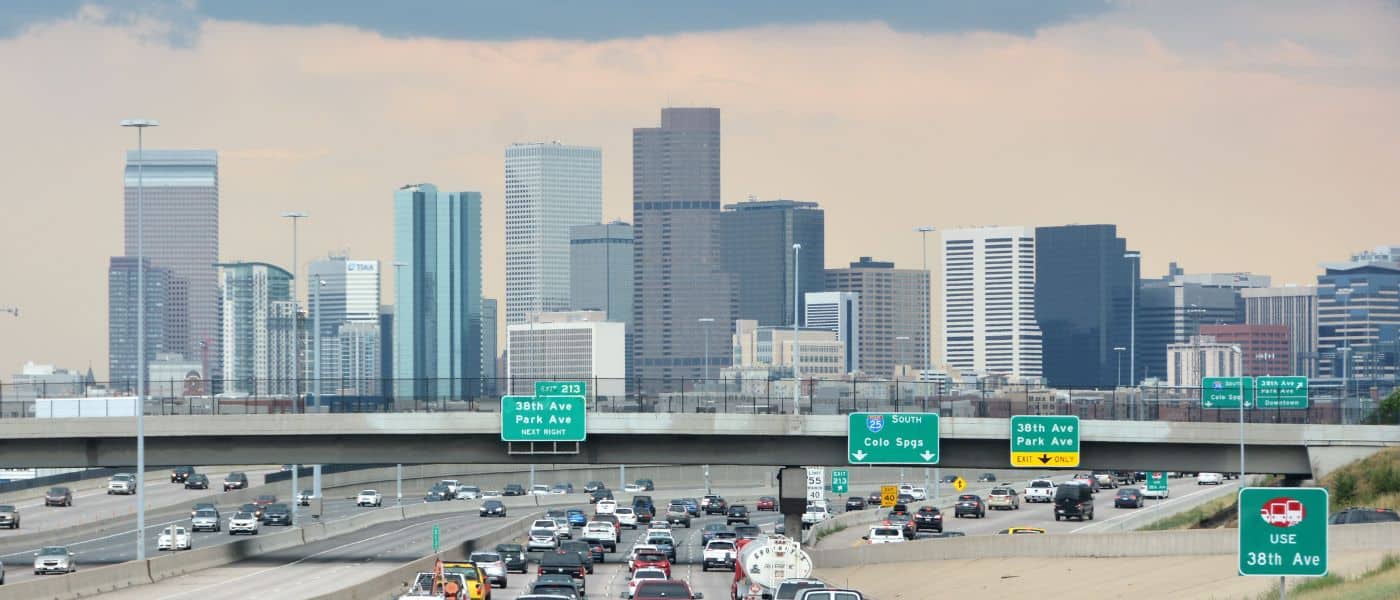
I-25 through Denver racks up around 15,000 accidents each year, and there are a few big reasons for that. The highway’s carrying way more traffic than it was ever meant to, the interchanges can be confusing or downright stressful, and there are several notorious “hot zones” where crashes just seem to cluster.
Growing Traffic Volume and Congestion
When I-25 was built back in the ‘50s and ‘60s, Denver’s metro population was under a million. Now, it’s pushing 3 million. That’s a wild jump, and the highway’s feeling the strain.
Daily Traffic Patterns:
- Morning rush hour (6:30-9:00 AM): packed, slow, and tense
- Evening rush hour (4:00-6:30 PM): pretty much the same story
- About 41 accidents per day, every day
- Weekends? Extra busy with folks heading up I-70 and into the mountains
It’s not just rush hour, either. Traffic volume stays high, and when things open up, some drivers just mash the gas—only to get caught off guard by sudden slowdowns. That mix of speeds makes lane changes and merges a gamble at any time.
Challenging Road Design and Infrastructure
Parts of I-25 are just plain awkward. The highway ties into major arteries like I-70, I-225, 6th Avenue, and Colorado Boulevard, but those interchanges can be a headache. A lot of the ramps are shorter than what’s considered safe these days.
And don’t get me started on construction. CDOT always seems to have a project going, so there are narrow lanes, vanishing shoulders, and new traffic patterns popping up. It’s easy to get caught off guard.
Denver’s elevation shifts don’t help either. Steep grades can mess with braking and engine performance, especially if you’re not used to driving at altitude.
High-Risk Interchanges and Hotspots
Some spots on I-25 are notorious for accidents. The downtown area, where I-25, I-70, and 6th Avenue all meet, is probably the worst. You’ve got merge points everywhere and traffic flying by.
Major Accident Hotspots:
- I-25/I-70/6th Avenue downtown interchange
- I-25/Hampden Avenue
- Denver Tech Center corridor (Orchard to County Line Road)
- I-25/Speer Boulevard
- I-25/Colfax Avenue
The Denver Tech Center stretch is infamous for rear-end crashes—traffic can be humming along at 70 mph and then, bam, it’s stopped. The I-25/I-225 interchange in Aurora isn’t much better, with all those complicated merges. These spots demand your full attention, no question.
Distracted Driving and Inattention
Distracted driving is a huge problem on I-25. A 2025 Colorado Department of Transportation survey found that 91% of Colorado drivers admitted to being distracted behind the wheel in the past week. Phones are the main culprit, but honestly, anything that takes your mind or eyes off the road can lead to trouble.
Mobile Device Use Behind the Wheel
Phones are the big distraction. In 2024, the Colorado State Patrol looked into 268 fatal and serious injury crashes involving a distracted driver.
Starting January 1, 2025, it’s illegal in Colorado to hold your phone while driving. Texting, checking notifications, scrolling through apps—it’s all ticket-worthy.
If you’re going 65 mph, you’ll cover a football field in less than four seconds. Look down to read a text? That’s a hundred yards, easy, with no idea what’s happening ahead. On I-25, that’s a recipe for rear-end collisions or drifting out of your lane.
After a distracted driving crash, attorneys can actually get phone records to see if the at-fault driver was texting or calling at the time of the accident.
Other In-Vehicle Distractions
Phones aren’t the only problem. Eating, drinking, fiddling with the radio or GPS, even just talking with passengers—all of it steals your attention. Reaching for stuff, dealing with kids, grooming, you name it.
Those tricky interchanges at I-70, 6th Avenue, and Hampden Avenue? They need your full focus. Any distraction there can lead to a side-swipe or a bad merge.
Impact on Reaction Time and Awareness
Distractions mess with your reaction time. Rush hour, especially from 3 to 6 p.m., is when you need to be sharp—split-second decisions can mean the difference between stopping safely and plowing into someone.
If your mind’s elsewhere, you might miss brake lights, not notice a car merging, or drift out of your lane. Even hands-free calls aren’t safe; your brain just can’t give driving its full attention when you’re wrapped up in a conversation. Over 3,100 people died in distracted driving crashes in 2019 across the U.S.—it’s not just a Denver thing.
Speeding, Aggressive, and Reckless Behaviors
Dangerous driving is a huge issue on I-25, where high speeds and packed lanes leave no room for mistakes. Speeding, sudden lane changes, tailgating, and letting your emotions take the wheel—these all crank up the risk.
Speeding Above Posted Limits
Speeding’s a classic cause of I-25 wrecks. When you’re going too fast, you have less time to react and, if things go wrong, the crash will be worse.
Stopping distance jumps up fast as your speed increases. At 75 mph, you need way more room to stop than at 55 mph. That difference can be the line between a close call and a pileup.
Speed limits change along I-25 based on conditions—merges, curves, usual traffic. They’re set for a reason. Ignoring them just isn’t worth it.
A few ways to avoid speeding accidents:
- Check your speed, especially after changing zones
- Use cruise control when it makes sense
- Leave early so you’re not in a rush
- Watch for those digital signs that change limits on the fly
Aggressive Lane Changes
Some drivers cut across lanes without warning, skipping signals or mirror checks. On I-25, with cars packed close, that’s a gamble.
Sudden lane changes force others to brake or swerve, and in construction zones or rush hour, one bad move can cause a chain reaction.
People often do this when they’re late or impatient, but the few seconds gained aren’t worth the risk. The safe way? Signal early, check your mirrors, and make sure there’s space.
Tailgating and Following Too Closely
Tailgating—riding someone’s bumper—leaves no room to react if traffic suddenly slows. The recommended gap is at least three seconds, but in rain, snow, or heavy traffic, bump that up to four or five.
A lot of rear-end crashes happen because someone was too close and couldn’t stop in time. Plus, tailgating stresses out the driver in front and can escalate into something worse. If someone’s tailgating you, just keep calm and let them pass when you can.
Road Rage and Emotional Driving
Road rage is all too common, especially with Denver’s congestion. Frustration can boil over into speeding, tailgating, rude gestures, or even blocking others on purpose. Sometimes it goes beyond just driving and turns into an actual confrontation.
I-25’s traffic jams can push anyone’s buttons, and the anonymity of being in a car seems to bring out the worst in some people. Best advice? Don’t engage. Let it go and focus on getting where you’re going safely.
Impaired and Fatigued Driving Risks
Impaired and drowsy drivers are behind a lot of I-25’s worst crashes. Whether it’s alcohol, drugs, or just plain exhaustion, these drivers have slower reactions and worse judgment—bad news for everyone around them.
Driving Under the Influence of Alcohol or Drugs
Drunk or drugged driving is one of the most avoidable causes of crashes on I-25. Alcohol and drugs mess with your judgment, slow your reflexes, and make it harder to control your car. State Patrol runs sobriety checkpoints along I-25 to catch impaired drivers.
Even a little alcohol can affect you. At the legal limit of 0.08% BAC, concentration and coordination drop. Drugs—illegal or otherwise—can be just as bad.
Impaired drivers are more likely to speed, drift between lanes, or miss hazards. Judging distances and keeping safe following gaps gets tougher, too. Mix that with I-25’s traffic and ever-changing speeds, and it’s a recipe for disaster.
Driver Fatigue and Drowsy Driving
Fatigue is behind about one in five fatal crashes. Drowsy driving is most common late at night or in the afternoon slump. On I-25, it’s often a single car veering off the road at high speed, with no sign the driver even tried to brake.
Driving tired is a lot like driving drunk. After 18 hours awake, your skills are about as bad as if you were at 0.05% BAC. Stay up 24 hours and you’re at 0.10%—worse than the legal limit.
Signs you’re too tired to drive:
- Yawning or blinking a lot
- Drifting between lanes
- Missing your exit or traffic signs
- Forgetting the last few miles
The only real fix is sleep—seven or eight hours, not just a strong coffee. If you’re nodding off, pull over at a rest stop. It’s not worth the risk.
Medication and Other Impairments
Prescription and over-the-counter meds can mess with your driving just as much as alcohol, if not more. It’s surprising how many everyday medications mention drowsiness—think antihistamines, sleep aids, painkillers, and anxiety meds. Even those cold and allergy remedies you grab without a second thought can slow your reflexes.
Always check the label for warnings about driving. Some meds stick around in your system longer than expected, so that groggy feeling in the morning after a nighttime dose? Still a problem behind the wheel. Mixing meds, or combining them with alcohol, only makes things worse.
Then there are medical conditions like sleep apnea. Folks with untreated sleep issues might not realize how off their alertness is. If your medication makes you drowsy, maybe skip driving altogether or at least avoid it during your sleepiest hours.
Weather, Environmental, and Visibility Hazards
I-25 in Denver is notorious for weather surprises that pop up out of nowhere and turn the road into a hazard zone. The high elevation and those unpredictable mountain patterns mean you’re dealing with black ice, visibility headaches, and slick grades more often than you’d like.
Black Ice and Slick Road Surfaces
Black ice is sneaky. It shows up when temps dip below freezing, leaving a nearly invisible sheet on the road. On I-25, you might not even notice it until your car starts to slide. It’s called “black” ice because it’s clear and blends right in with the pavement.
Morning and evening are prime times for black ice here, thanks to Colorado’s wild temperature swings. Bridges and overpasses are the first to freeze—cold air wraps around them from all sides. Rain and snow just add to the slipperiness, making it harder to stop, sometimes increasing stopping distances by up to 30 percent when precipitation is heavy.
If it’s near freezing, slow down, especially in shaded spots where ice lingers. Give yourself more room behind the car ahead and steer gently—trying to stop or turn suddenly is asking for trouble.
Rapid Weather Changes and Limited Visibility
Weather on I-25 can go from fine to frightening in a matter of minutes, thanks to Denver’s mountain backdrop. Fog, snow, and even blowing dust can drop visibility fast, and that’s behind about 4 percent of weather-related crashes across the country. It’s tough to avoid what you can’t see.
Heavy rain and snow are the worst offenders. Rain alone causes 77 percent of weather-related wrecks, cutting visibility and making the pavement slick. Fog can shrink your sight lines to a few hundred feet and forces most drivers to slow down, if they even notice it forming.
When it gets hard to see, turn on your headlights, back off the gas, and leave more space between you and the next car. Skip the high beams in fog—they just bounce back at you. No sudden moves.
Elevation Changes and Slippery Grades
I-25 doesn’t just run flat—it climbs and drops, sometimes pretty steeply. That means you’ll hit stretches where traction is suddenly a problem. Different elevations along the route can mean dry pavement one minute and icy patches the next.
Steep grades get dicey when they’re wet or frozen since gravity is working against you. If you’re driving something heavy, you’ll need even more room to stop. The thinner air at higher spots can also mess with weather patterns, making certain sections more unpredictable.
Use lower gears going downhill and try not to ride the brakes—they can overheat and quit on you. Always check the weather before heading out, and honestly, give yourself extra time if the forecast looks sketchy.
Mechanical Failures and Poor Vehicle Maintenance
Breakdowns on I-25 aren’t just inconvenient—they can be downright dangerous. Ignoring basic car care like brakes, tires, or steering can lead to sudden loss of control, especially with Denver traffic.
Tire Blowouts and Tire Problems
Tire blowouts come out of nowhere and can send you spinning at highway speeds. Worn treads, low pressure, or just old tires up the odds.
Check your tire pressure at least once a month and keep an eye on tread depth. If it’s worn down to 2/32 of an inch, it’s time for new tires. Denver’s temperature swings can mess with pressure, so don’t assume it’s fine.
Some common tire issues:
- Uneven wear from alignment problems
- Damage to the sidewall from hitting curbs or potholes
- Bulges or blisters in the rubber
- Cracks from age or too much sun
A lot of I-25 crashes start with a blowout and a driver who panics or overcorrects. Basic tire care can prevent most of that drama.
Brake and Steering System Failures
If your brakes go, you lose your main way to slow down or stop. Worn pads, low fluid, or busted lines can mean total failure.
Listen for squeals, feel for a soft pedal, or notice if your car pulls to one side—these are all red flags. Ignoring them could leave you without brakes in heavy traffic.
Steering trouble is just as bad. Worn tie rods, a failing power steering pump, or a loose column can make it impossible to control your car. If your steering wheel feels sloppy or your car drifts, get it checked now.
Regular brake checks during oil changes or service visits can catch problems before they turn serious.
Other Critical Vehicle Malfunctions
An engine stalling in the middle lane on I-25? That’s a nightmare. Losing power leaves you stuck where other drivers might not see you in time.
Lights are another biggie. If your headlights, taillights, or turn signals aren’t working, you’re basically invisible, especially in bad weather or at night.
Windshield wiper problems can turn a rainstorm into a white-knuckle drive. Cracked windshields can shatter and block your view—don’t wait to fix them. Fluid leaks under your car are usually a sign something’s wrong and shouldn’t be ignored.
Don’t brush off dashboard warning lights. Get things checked out, and keep records of your maintenance. If a breakdown leads to a crash, you’ll want proof you took care of your car.
High Accident Locations and Common Crash Types
I-25 in Denver racks up about 15,000 crashes a year, with certain spots and types of collisions popping up way more than others. The downtown merge, Tech Center, and big interchanges are notorious, and rear-enders are everywhere during rush hour.
Dangerous Intersections and Exit Ramps
The tangle of I-25, I-70, and US-6 downtown is Denver’s top accident magnet. Multiple merging lanes, everyone jockeying for position—things get chaotic fast. The I-25/US-36 interchange is another hot spot, with speed differences tripping up drivers as they merge.
Exit ramps through the Tech Center, especially between Orchard and County Line, are rough during rush hour. Traffic can go from 70 mph to a dead stop in seconds, especially near Belleview and Orchard. People just don’t give enough space.
The I-25/C-470 interchange in Littleton is tricky too—ramps are short, so there’s barely time to adjust your speed. Aggressive moves to catch an exit lead to sideswipes and loss of control during lane changes.
Rear-End and Single Vehicle Collisions
Rear-end crashes are the bread and butter of I-25 accidents, especially when traffic is crawling. Distracted drivers and tailgaters make it worse, particularly downtown and in the Tech Center. Single-car crashes? Those usually happen when someone overcorrects after drifting or dodges something in the road.
Bad weather just ups the odds. The first few minutes of snow see a spike in accidents as drivers don’t slow down fast enough. Black ice sends cars spinning into medians or guardrails before you know it.
North of Denver, heading toward Fort Collins, single-vehicle wrecks happen more on curves and hills—drivers push their luck with speed or underestimate how their car handles at altitude, especially on weekends.
Multi-Vehicle Pileups and Chain Reaction Crashes
Rush hour traffic packs cars so tight that one sudden brake can trigger a pileup. Chain reactions with three or more cars are common in the downtown merge, where traffic is thickest.
When traffic thins out at night, speeds creep up—sometimes over 80 mph. If something suddenly appears in the road, there’s no time to react. That seven-car pileup near Alameda? Just shows how quickly things can snowball when drivers follow too closely.
Construction zones are another headache. Lane shifts and barriers pop up with little warning, and people swerve or brake hard to avoid them. Accidents spike wherever there’s roadwork and less room to maneuver.
How to Prevent Accidents and Stay Safe on I-25
Staying safe on I-25 isn’t about luck—it’s about staying sharp, adapting to whatever’s happening around you, and, honestly, putting in the effort to drive smarter. If you keep your head on a swivel, adjust for traffic and weather, and actually work on your driving skills, your odds of a crash drop way down.
Best Practices for Defensive Driving
Defensive driving here? It starts with space. Give yourself at least three or four seconds between you and the car ahead. That’s your buffer when things go sideways.
Lane changes are risky on this highway. Always check your mirrors, signal way before you move, and double-check your blind spots. Quick, last-minute lane changes are a recipe for disaster.
A few defensive driving basics:
- Both hands on the wheel, 9 and 3—old-school but effective
- Scan ahead at least 12 seconds down the road
- Put the phone away, skip the snacks, and set your GPS before you roll
- Don’t hang out in other drivers’ blind spots
- Check your mirrors every handful of seconds
Speed control matters more than just matching the flow. If the weather’s bad or traffic’s unpredictable, slow down—even if others don’t.
Adapting to Traffic and Weather Conditions
I-25 traffic is a moving target. During rush hour, keeping a steady pace helps avoid those chain-reaction rear-enders. When it’s emptier, don’t let the open road tempt you into speeding.
Weather on the Front Range is fickle. As soon as snow or rain starts, drop your speed and give more space. The first bit of wet weather is the slickest—oil and grime mix with water and make things extra slippery.
Weather-specific tips:
| Condition | What to Do |
|---|---|
| Light snow/rain | Ease off by 10-15 mph, double your following gap |
| Heavy snow | Slow down by 25+ mph, triple your distance |
| Ice/black ice | Stay smooth—no sudden brakes or turns |
| Fog | Low beams only, slow down, give more space |
Check the forecast before you leave. If things get dicey, it’s better to pull off and wait it out than risk a wreck.
Taking Defensive Driving Courses
Defensive driving classes can actually make a difference—these aren’t just for new drivers or people with tickets. They teach you how to spot hazards and avoid accidents in ways you probably didn’t learn at 16.
Colorado has both in-person and online defensive driving courses. Most last a few hours and cover stuff like managing space, controlling speed, and handling emergencies. Plus, some insurance companies throw in a discount if you finish one.
Courses geared toward highway driving are especially useful. They cover merging, construction zones, and dealing with aggressive drivers. Spending a few hours on this could save you a world of trouble.
If you drive for work, see if your employer offers or requires defensive driving training. It’s worth asking, especially if you’re on I-25 a lot.
Legal Steps After an I-25 Accident in Denver
After a crash on I-25, your first move should always be safety—then think about your legal options and personal injury claim rights. Colorado gives you three years to file, but what you do right away can make or break your case.
What To Do If You’re Involved in a Crash
If you can, move your car out of traffic—don’t risk another collision.
Call 911. If anyone’s hurt, get medical help on the way. A police report will document everything, which is huge later on.
Swap info with the other drivers: names, numbers, insurance, license plates—the basics.
Take photos of the cars, the road, the whole scene. Pictures can tell the story better than words.
Even if you feel fine, get checked out by a doctor. Some injuries take time to show up, and you’ll want a record linking them to the accident.
Don’t admit fault or say sorry at the scene. Stick to the facts with everyone, including the police.
Understanding Personal Injury Claims
A personal injury claim is basically a way to get compensated for costs tied to an accident—think medical bills, missed paychecks, car repairs, and all those headaches that come from someone else’s carelessness.
It’s not just about what you’ve already paid, either. If you’re stuck with ongoing medical treatment or therapy months down the line, that’s part of the claim too.
Insurance companies? They’ll usually toss out a lowball offer at first, hoping you’ll settle for less than what you actually need. Sometimes they drag their feet or flat-out deny things, just to keep their payouts as small as possible.
One thing that can help: send a preservation letter to the other driver and their insurer. This legal notice tells them to hang onto every scrap of evidence—vehicle data, phone records, the whole nine yards.
The claim process itself means pulling together proof, figuring out what you’re really owed, negotiating (sometimes arguing) with insurance adjusters, and, if things get sticky, maybe even filing a lawsuit.
When to Consult Denver Car Accident Lawyers
You’ll want to reach out to Denver car accident lawyers if you’ve been injured, aren’t sure who’s at fault, or the insurance company seems to be dragging its feet. It’s especially smart after a serious crash on I-25—those can get complicated fast.
Some accidents involve out-of-state drivers who seem to vanish after the fact. Lawyers have ways of tracking them down and digging up the right insurance details, which, let’s be honest, isn’t always something you want to handle alone.
A good attorney knows what evidence matters most. They’ll chase down the paperwork, talk to witnesses, and put together the proof needed to show who really caused the wreck.
Negotiating with insurance companies? That’s another headache lawyers take off your plate. They’re familiar with all the tricks adjusters use to try and pay out less, and they’re not afraid to push back.
Things get even messier when multiple vehicles or commercial trucks are involved, or if there are serious injuries. In those situations, having someone who actually understands Colorado’s traffic laws and insurance rules can make a world of difference.
Most Denver car accident lawyers will at least chat with you for free to see if you have a case. And usually, you don’t pay anything unless they actually win you some money.