Phoenix Parking Lot Accidents
Parking lots might look pretty harmless, but in Phoenix, they’re the scene of thousands of accidents every year. People end up with real injuries, busted-up cars, and a lot of confusion about their legal options. If you’re hoping for compensation after a parking lot crash, you’ll need to wrap your head around how negligence actually works in these cases.
Proving negligence in a Phoenix parking lot accident means showing that someone else didn’t act with reasonable care, and that slip-up directly caused the wreck and your losses. That means gathering evidence right after the accident, keeping track of your injuries, figuring out who’s really responsible, and navigating Arizona’s tricky comparative fault laws. It’s surprisingly easy to underestimate these cases, especially when there’s blame to go around—sometimes it’s not just the other driver, but property owners too.
Let’s get into the legal nuts and bolts for parking lot accidents in Arizona, plus the steps you’ll actually need to take if you want to build a solid negligence claim. From understanding what “duty of care” even means, to dealing with insurance companies and lawyers, here’s what you should know to protect yourself and (hopefully) get fair compensation.
Key Elements of Proving Negligence in Parking Lot Accidents
To recover compensation after a parking lot accident, you’ve got to prove four things. These elements all work together to show that someone’s carelessness really did cause you harm—and cost you money.
Duty of Care in Phoenix Parking Lots
Both property owners and drivers owe a duty of care in parking lots. Owners have to keep their lots safe for shoppers and visitors—that means fixing potholes, making sure the lights work, and clearly marking walkways.
Drivers owe it to others to drive safely, too. That’s stuff like watching for people darting between cars, following speed limits (even if they’re low), and yielding at crosswalks. Parking lots in Phoenix might not be highways, but they can be chaotic if people aren’t paying attention.
Legally, shoppers are considered “invitees,” which means property owners are supposed to check for hazards regularly and warn people about anything dangerous they can’t fix right away.
Breach of Duty and Common Violations
A breach happens when someone drops the ball on their duty of care. If a property owner ignores potholes, leaves broken lights for weeks, or lets parking lines fade away, that’s a violation of Phoenix’s codes for commercial parking lots.
Drivers breach their duty by checking their phones, zooming through the lot, or ignoring right-of-way rules. Some of the classic mistakes? Backing out without looking, cutting across empty spaces, or blowing through crosswalks.
Common breaches include:
- Bad lighting that hides hazards
- Faded or missing traffic markings
- Unfixed potholes or cracks
- Distracted or rushed drivers
- Not yielding to pedestrians
Timing matters here—a pothole that’s been there for ages is a much bigger problem than a spill from five minutes ago.
Establishing Causation
Causation is about connecting the dots between someone’s carelessness and your injury. You’ve got to show the bad condition or reckless driving actually caused your harm. If you twist your ankle in a parking lot pothole, and there are photos showing where and how big it was, that’s a clear link.
Medical records are huge at this stage. Doctor’s notes about how you got hurt and what exactly happened help tie the breach to your injuries. Witnesses who saw the whole thing? Even better.
But the link has to be direct. If you trip because you’re glued to your phone, not because of a pothole, that’s a different story. The breach has to be the real reason you got hurt.
Documenting Damages
Damages are the concrete losses you suffered. There’s the obvious stuff—medical bills, lost wages, car repairs. Then there’s pain and suffering, which covers the less tangible stuff like ongoing pain or a lower quality of life.
What you’ll want to keep:
- ER records and treatment bills
- Photos of bruises, cuts, or other injuries
- Pay stubs to show missed work
- Receipts for meds or medical gear
- Notes about pain or how your life’s changed
Arizona uses pure comparative negligence. Basically, you can still get paid even if you’re partly at fault, but your payout gets cut by your share of the blame. The better your documentation, the better your odds.
Critical Steps to Take After a Parking Lot Accident
What you do right after a parking lot accident can make or break your claim. Getting physical evidence, talking to witnesses, and snagging official reports all help prove negligence down the line.
Gathering Evidence at the Scene
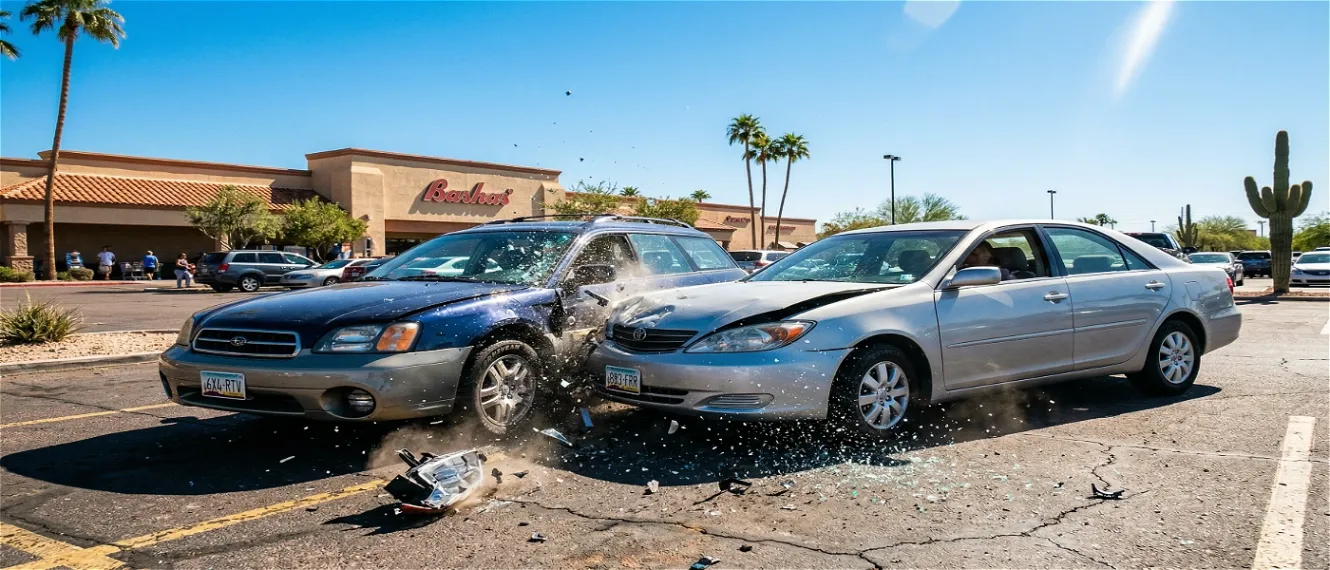
Before cars get moved or the scene changes, take photos of everything. Snap shots of the damage from different angles, and don’t forget the little stuff—skid marks, tire tracks, debris. It all helps paint the picture.
Don’t just focus on the cars, either. Get photos of traffic signs, lane markings, lighting, and any obstacles that might have played a part. If it was raining or icy, document that too.
Where the cars ended up matters. Show their positions relative to parking spots, stop signs, and walkways. If you’ve got visible injuries, take pictures—even if they seem minor at first, they can get worse.
Write down what happened while it’s still fresh in your mind. Note the time, place, traffic, and how things unfolded.
Obtaining Witness Statements and Contact Information
Witnesses can really help back up your version of events. If there are bystanders, calmly ask if they saw what happened and if they’ll give you their name and contact info. Sometimes people will even write down or record a quick statement right there.
Ask them about the basics—who was going where, if anyone was speeding or distracted, and whether signs were visible. Even if they only saw part of it, their input can help.
Security guards or parking lot attendants are worth talking to as well. They might have seen something or can at least verify what the lot looked like right after the crash.
Collecting Surveillance and Official Reports
A lot of parking lots have security cameras. If you spot any, ask the property manager or security folks how to get a copy of the footage. Don’t wait—those videos can get wiped in just a few days.
Call the police, even for minor accidents. A police report gives you an official, third-party account of what happened. If security writes up an incident report, ask for that too—they often include details about the conditions and who was around.
Medical Documentation and Assessing Damages
Medical records are the backbone of most parking lot accident claims. Damages break down into three main buckets: medical bills, lost income, and pain and suffering.
Medical Bills and Record Keeping
Hang onto every medical bill from day one. ER visits, scans, prescriptions, physical therapy—it all counts.
You’ll need your records to show your injuries really came from the parking lot accident. Doctors should note every symptom, diagnosis, and treatment. If you skip appointments or wait too long to get care, insurance companies will use that against you.
Keep both paper and digital copies of everything, like:
- ER and ambulance reports
- Doctor’s notes from all visits
- Physical therapy updates
- Prescription receipts
- Imaging results (X-ray, MRI, etc.)
If your doctor thinks you’ll need future treatment, get that in writing too.
Lost Wages and Work Impact
Lost wages are about the money you missed out on because of the accident. Pay stubs from before and after help show this.
A letter from your boss confirming the days you missed is solid backup. If you’re self-employed, dig up tax returns or bank statements.
It’s not just about paychecks you missed right away. If your injuries keep you from going back to the same kind of work—or force you into a lower-paying job—that counts too. Lost promotions or certifications? Those matter for damages, so keep any documentation.
Pain and Suffering Documentation
Pain and suffering is the hardest to prove—there’s no bill for it. A personal injury journal can help. Write down your pain levels, what you can’t do, how you’re sleeping, and any emotional struggles. Missed family events or canceled plans? Note those.
Pictures and videos of your injuries or mobility issues help, too. Doctors can explain what kind of pain is normal for your injuries.
If you’re seeing a therapist or counselor, keep those records. Anxiety, depression, or PTSD from the accident can all be part of your claim.
Determining Liability and Comparative Fault in Arizona
Arizona lets you recover damages even if you’re partly to blame for the accident. The pure comparative negligence system means your payout just gets trimmed by your share of the fault, which definitely affects how much you’ll actually get after a parking lot crash.
Understanding Comparative Fault Rules
Arizona’s pure comparative negligence law (ARS §12-2505) says you can recover damages even if you’re 99% at fault.
Your compensation just gets reduced by your percentage of blame. For example, if you’re awarded $50,000 but found 30% at fault, you walk away with $35,000.
What’s important about Arizona’s system:
- No cutoff for recovery, no matter your share of fault
- Damages get cut in proportion to your fault
- Investigators look at what both sides did wrong
- Insurance companies will try to pin more blame on you to pay less
In parking lot accidents, fault determination looks at things like speeding, right-of-way mistakes, distracted driving, and not yielding. If you’re backing out without looking and someone else is speeding, you might both share some blame—and your compensation gets adjusted accordingly.
Multiple Party and Property Owner Liability
It’s not always just the drivers who are responsible. Property owners can be on the hook if lousy lighting, bad maintenance, or missing signs played a role.
Arizona recognizes joint and several liability for multiple defendants. That means each one can be held responsible for the whole amount, though your own fault still reduces what you get.
Who might be liable:
- Other drivers in the crash
- Property owners who let hazards slide
- Businesses tasked with parking lot upkeep
- Contractors who did shoddy repairs
If the lot’s a mess—faded lines, broken lights, potholes, blocked views—the owner could be partly to blame. And if there are multiple responsible parties, they can’t dodge liability just by pointing fingers at each other.
Dealing with Insurance Companies and Negotiations
After a Phoenix parking lot accident, dealing with insurance is a minefield. Adjusters have their own playbook for minimizing payouts, so you’ll need solid documentation and a smart approach to get what you deserve.
Filing a Claim with Insurance Companies
Start by letting your insurance company know about the accident ASAP—usually within a day or two. Give them the basics: when and where it happened, who was involved.
Arizona law requires drivers to carry minimum liability insurance, which covers damage you cause to others. When you file a claim, back it up with photos of the damage, witness info, and any surveillance footage you can get from the lot.
Once you file, an adjuster will look into the claim, review the evidence, decide who’s at fault, and come up with a settlement offer. Keep track of every phone call, email, and letter—insurance companies are notorious for “losing” things or twisting your words.
Navigating Insurance Negotiations
Insurance adjusters have a habit of tossing out lowball settlement offers, hoping to close cases fast. Those first numbers rarely come close to covering everything—think medical bills, lost wages, car repairs, the whole mess. Don’t let them rush you into a quick yes.
When you’re in the thick of negotiations, it’s smart to stick to what you can prove. Keep your story rooted in facts, and don’t admit fault or start guessing about how things happened. And seriously, don’t give a recorded statement unless you’ve talked to a lawyer first—adjusters know how to twist words to shrink your payout.
Key negotiation strategies include:
- Documenting all damages with receipts and bills
- Calculating total costs before accepting any offer
- Responding in writing to create a paper trail
- Requesting specific explanations for low settlement offers
If talks break down or the insurance company starts playing dirty, legal representation can make a world of difference. Attorneys know the ins and outs of policy limits and aren’t shy about pushing back when insurers try to get away with less than you deserve.
Role of Expert Testimony and Legal Support
Expert witnesses and legal professionals can be game-changers when it comes to proving negligence in parking lot accidents. Their experience helps pin down who’s at fault and can make a claim much more convincing.
Utilizing Expert Testimony
There’s a world of difference between regular witnesses and experts. Expert witnesses—think accident reconstruction specialists or medical pros—break down complicated stuff so judges and juries actually get it.
Common types of expert witnesses include:
- Accident reconstruction specialists – They analyze vehicle positions, speeds, and impact patterns to show how the crash occurred
- Medical experts – They connect injuries directly to the accident and explain treatment needs
- Safety experts – They evaluate parking lot conditions like lighting, signage, and maintenance issues
Expert testimony is especially useful if several people might share blame, or if the parking lot owner’s negligence played a part. These pros use things like physical evidence, photos, and science to piece together what happened. Their opinions carry weight—they’re not personally invested in the outcome, so their analysis tends to stick.
A traffic safety expert might point out that poor parking lot design broke safety rules. Or a medical expert could walk through why certain injuries needed serious treatment.
When to Consult a Car Accident Lawyer
Sometimes, you just need a car accident lawyer, especially if there are bad injuries or the question of blame gets murky. The legal system isn’t exactly user-friendly, and attorneys know how to handle evidence before it disappears, spot everyone who might be liable, and pull in the right experts.
Insurance companies love to throw out low offers to folks without lawyers. Having a good attorney means you’ve got someone fighting for a payout that actually covers your medical bills, lost work, and pain. They’re also familiar with Arizona’s comparative fault rules—those can really affect how much you get.
If your injuries need ongoing care, or if it’s not clear who’s responsible, legal help becomes even more important. Most of the time, these lawyers work on contingency, so you only pay if they win something for you.
Understanding Arizona Laws Specific to Parking Lot Accidents
Arizona law doesn’t ignore parking lot accidents—they apply standard traffic regulations even on private property. These rules set out who’s at fault and who had the right of way, and they’re a big factor in how negligence gets proven.
Relevant Phoenix and Arizona Statutes
Arizona applies its usual traffic laws to parking lot crashes, even though most lots are private property. Cars driving in the main lanes have the right of way over vehicles backing out of spaces—so don’t assume you can just pull out. Drivers also have to obey posted stop signs and signals inside parking lots. Ignore them, and you could be on the hook if there’s a wreck. If you hit a parked car, you’re usually responsible, unless that car was illegally parked.
Door-related accidents are on the person who swung the door open into traffic or another car. Arizona Revised Statutes say that leaving the scene of a parking lot accident is a Class 3 misdemeanor. That can mean up to 30 days in jail, $500 in fines plus surcharges, and six points on your license.
How Arizona Law Impacts Negligence Claims
Arizona runs on a comparative negligence system, so you can still recover damages even if you share some of the blame. The court just knocks down your compensation by whatever percentage they decide was your fault. Say you’re 20% at fault in a crash—you’d still get 80% of your total damages, which feels fair enough.
Right-of-way rules in Arizona’s parking lots spell out liability pretty clearly. If you back into traffic without yielding, you’re likely on the hook for the collision. That kind of straightforward violation makes it much easier to prove negligence when the details line up.
Arizona law wants you to document parking lot crashes thoroughly. Police reports can really help negligence claims, but here’s the catch: a lot of departments don’t even show up for private property accidents unless someone’s hurt. In those cases, it’s up to you—witness statements, video footage, anything you can gather becomes crucial when there’s no official report.