Can You Sue DoorDash, Amazon Flex, or Instacart?
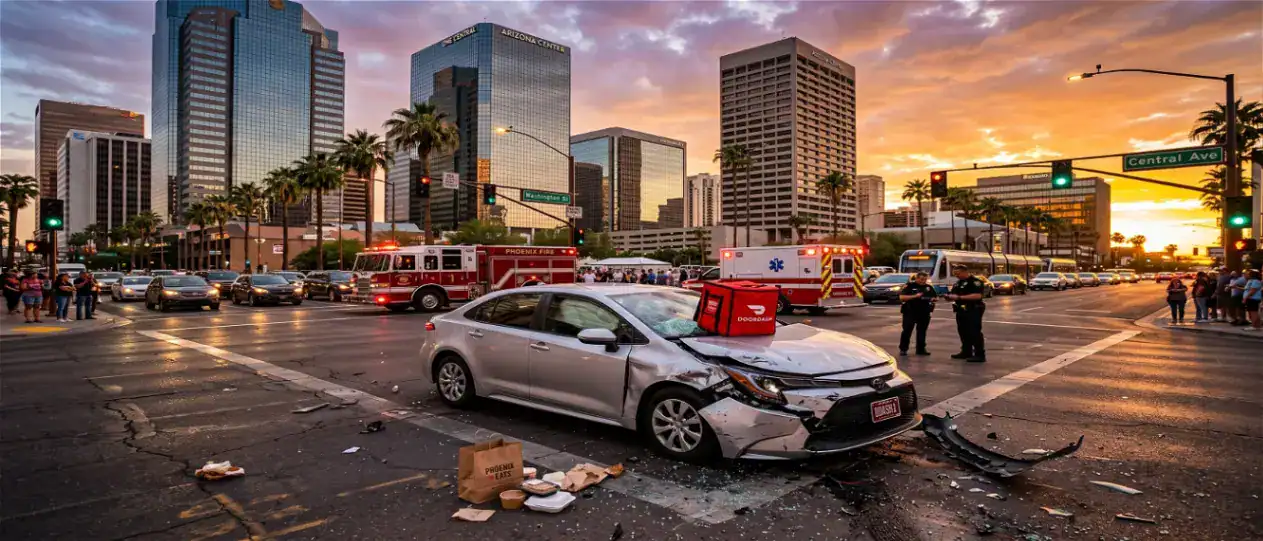
Phoenix streets are packed with delivery drivers racing to meet tight deadlines. Amazon Flex, DoorDash, Instacart, and other gig economy drivers share the road with regular commuters, but the pressure to deliver quickly often leads to accidents. When a delivery driver hits you, figuring out who is responsible gets complicated fast.
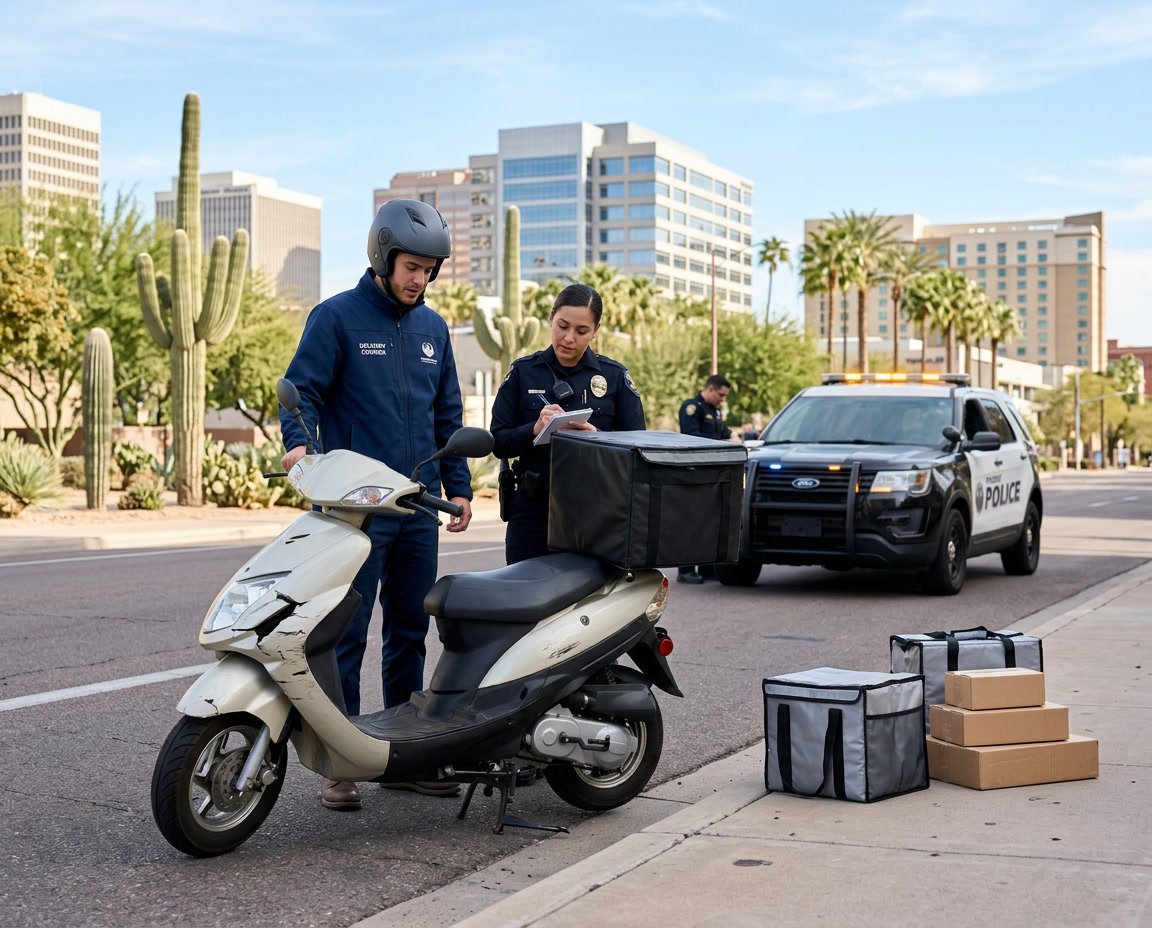
Most delivery companies classify their drivers as independent contractors, which means the company may try to avoid paying for damages even when their driver caused the crash. The legal structure these companies use makes it harder to hold them accountable. The answer to whether you can sue depends on several factors including which company employed the driver, what they were doing at the time of the crash, and what insurance coverage applies.
Understanding liability rules, insurance options, and the steps to take after a delivery driver accident can protect your rights. This guide breaks down the legal challenges victims face and explains how to pursue compensation when a delivery driver causes harm.
Understanding Delivery Driver Accidents in Phoenix
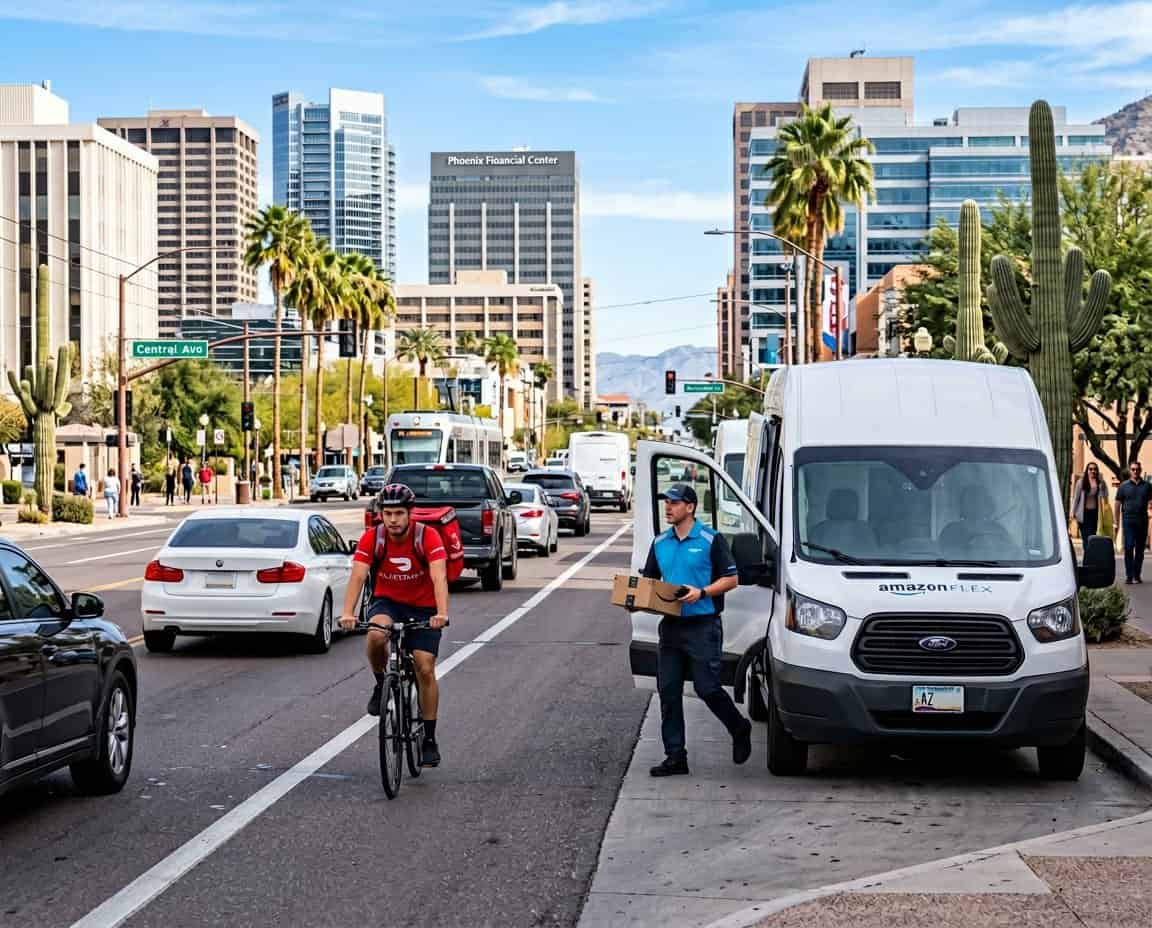
Delivery driver accidents in Phoenix involve crashes with vehicles used by drivers working for companies like DoorDash, Amazon Flex, Instacart, UberEats, and other delivery services. These accidents happen more often than most people realize, and they can involve cars, vans, trucks, motorcycles, bicycles, or pedestrians.
Why Delivery Driver Accidents Are Increasing
The number of delivery driver accidents in Phoenix has grown significantly in recent years. More people order food, groceries, and packages online than ever before. This creates heavy demand for delivery services throughout the Valley.
Phoenix roads now have thousands of delivery drivers working at any given time. They drive through Downtown Phoenix, Tempe, Scottsdale, Mesa, and surrounding areas making constant stops. Amazon vans, FedEx trucks, UPS vehicles, and gig economy drivers fill the streets daily.
These drivers work under strict time pressures. Companies track delivery times and expect drivers to meet quotas. A driver might need to complete 20, 30, or even 40 deliveries in a single shift. This pressure leads to speeding, rolling through stop signs, and other risky behaviors.
The combination of more drivers on the road and tight deadlines creates dangerous conditions. When drivers rush to meet their next delivery window, accidents become more likely.
Types of Delivery Drivers and Vehicles
Delivery drivers in Phoenix fall into different categories:
Commercial fleet drivers work directly for companies like Amazon, FedEx, and UPS. They drive branded delivery vans and trucks that belong to the company.
Independent contractors work for apps like DoorDash, Instacart, Grubhub, and Amazon Flex. These drivers use their personal vehicles and work flexible schedules.
The vehicles involved in delivery driver crashes vary widely. Large box trucks deliver packages to businesses. Standard cargo vans handle residential Amazon deliveries. Personal cars carry food orders. Cyclists and scooter riders deliver meals in busy downtown areas.
Each type of driver and vehicle creates different accident risks. A large delivery truck causes more damage in a crash than a sedan. However, food delivery drivers in personal vehicles often drive more erratically due to app notifications and route changes.
Common Causes of Delivery Driver Crashes
Delivery driver accidents happen for specific reasons related to the job itself. Distracted driving ranks as the top cause. Drivers check their phones constantly for new orders, directions, and customer messages. They look at GPS apps while driving and accept delivery requests on the move.
Fatigue plays a major role in these crashes. Many delivery drivers work long hours to earn enough money. Some work 10 to 12-hour shifts or drive for multiple apps in one day.
Speeding and aggressive driving occurs when drivers try to complete more deliveries in less time. They run red lights, make illegal turns, and fail to check blind spots. Drivers also double-park, make sudden stops, and pull out of parking spots without looking.
Poor vehicle maintenance causes some delivery driver accidents. Independent contractors may delay brake repairs or drive on worn tires to save money. Companies sometimes fail to properly maintain their fleet vehicles.
Key Differences Between Delivery and Regular Car Accidents
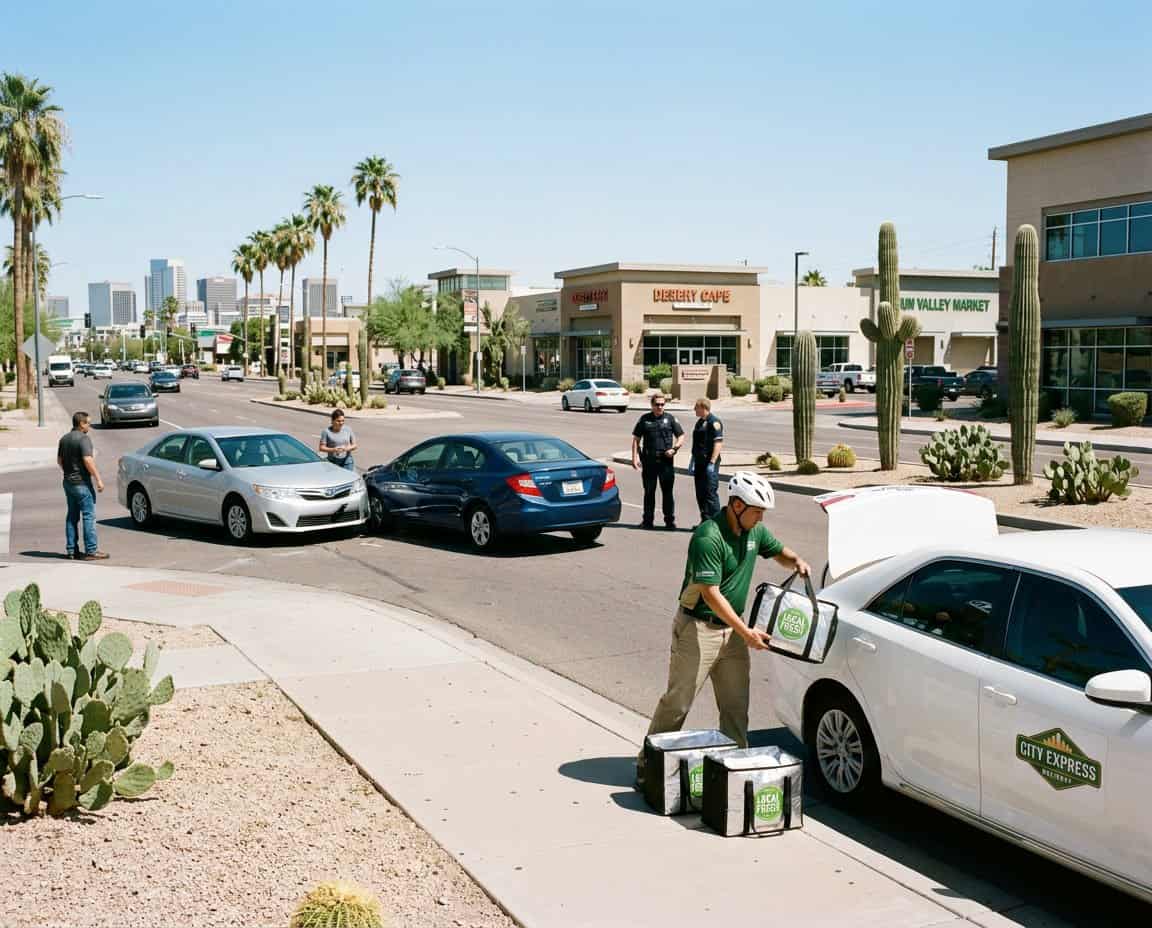
Delivery driver accidents involve layers of legal responsibility that don’t exist in typical car crashes. The main complications arise from unclear employment relationships, overlapping insurance policies, and questions about whether a company can be held liable for a driver’s actions.
Commercial Liability and Employer Responsibility
Regular car accidents usually involve two private individuals and their insurance companies. Delivery accidents can pull in large corporations that may be legally responsible for the crash.
When a driver works directly for UPS or FedEx as an employee, the company typically bears responsibility under a legal rule called respondeat superior. This means employers are liable for employee actions performed during work duties.
The situation changes with app-based services. Companies like DoorDash and Amazon Flex classify their workers as independent contractors rather than employees. This classification allows them to avoid the automatic liability that traditional delivery companies face.
Key factors that determine commercial liability include:
- Whether the driver was actively making a delivery
- If the driver was logged into the app
- Whether the driver had accepted an order
- If company policies or quotas contributed to unsafe driving
Companies may still share blame even with independent contractors if their business practices created dangerous conditions or if they failed to properly screen drivers.
Complex Employment Classifications
The driver’s employment status determines who pays for damages. Standard car accidents involve individual drivers and their personal insurance. Delivery accidents require sorting through employment relationships that companies deliberately keep unclear.
Traditional delivery companies hire drivers as W-2 employees with clear work schedules and company vehicles. These cases follow established legal paths for determining employer responsibility.
Gig economy platforms treat drivers as independent contractors who use their own vehicles and set their own hours. This classification shifts financial responsibility away from the company and onto the driver in many cases. The driver may be personally liable for damages, leaving victims to pursue compensation from someone with limited resources.
Arizona law looks beyond job titles to examine the actual working relationship. Courts consider factors like who controls the driver’s schedule, whether the company provides equipment, and how much independence the driver actually has.
Commercial Versus Personal Insurance
Insurance coverage in delivery accidents operates on multiple levels that don’t exist in regular crashes. A typical car accident involves two personal auto policies with clear coverage limits.
Delivery drivers often have three potential insurance sources: their personal policy, commercial coverage, and company-provided protection. Personal auto insurance usually excludes commercial activity, meaning a driver’s own policy may deny claims that happen during deliveries.
App-based delivery insurance typically works in stages:
| Driver Status | Active Coverage |
|---|---|
| App offline | Personal insurance only |
| App online, no order | Limited company coverage |
| Active delivery | Full company liability coverage |
Many gig drivers don’t realize their personal insurance won’t cover accidents during deliveries. When a crash happens, insurance companies investigate whether the driver was working at the time. If personal insurance denies the claim and the delivery company’s coverage doesn’t apply, victims face serious obstacles getting compensated.
Commercial policies carried by traditional delivery companies provide higher coverage limits than personal policies. Multiple insurance policies can apply to a single accident, requiring legal expertise to identify all available compensation sources.
Who Can Be Sued: DoorDash, Amazon Flex, Instacart, and More
When a delivery driver causes an accident in Phoenix, figuring out who can be sued depends largely on how the driver is classified and what they were doing at the time of the crash. Employee drivers create company liability, while gig workers typically require different legal approaches.
Liability for Employee Drivers
Companies that hire drivers as direct employees are usually responsible for accidents that happen during work hours. This responsibility comes from a legal rule called respondeat superior. Under this rule, employers must answer for the actions of their employees when those employees are doing their jobs.
Traditional delivery companies like FedEx Ground (for some routes), UPS, and direct-hire Amazon delivery service partners often employ drivers as W-2 employees. When these drivers cause accidents while making deliveries, the company typically becomes the primary defendant in a lawsuit.
The company’s commercial auto insurance policy should cover damages. These policies often have much higher coverage limits than personal auto insurance. This means injured victims have a better chance of recovering full compensation for medical bills, lost wages, and other damages.
Liability for Gig and Independent Contractor Drivers
DoorDash, Amazon Flex, Instacart, and Uber Eats classify most of their drivers as independent contractors. This classification makes it harder to sue the company directly. The driver becomes personally liable for accidents they cause.
These companies argue they simply connect customers with independent delivery people. They claim they don’t control how drivers do their work. This creates a major problem for accident victims because individual drivers often lack sufficient insurance coverage.
Some gig platforms provide limited insurance while drivers are actively on a delivery. DoorDash offers liability coverage during active deliveries. Amazon Flex provides coverage when drivers have packages in their vehicle. Instacart offers contingent liability coverage during active batches.
However, this coverage may not apply if the driver was between deliveries or had just logged into the app. Personal auto insurance policies often deny claims when drivers use their vehicles for commercial purposes without proper coverage.
The Role of Third-Party Delivery Partners
Many restaurants and retailers use delivery services without directly hiring drivers. A local Phoenix restaurant might contract with DoorDash to handle all deliveries. A grocery store might use Instacart shoppers.
In these cases, the merchant typically cannot be held liable for delivery driver accidents. The delivery platform or the driver bears responsibility. The contractual relationship between the merchant and the delivery service usually includes language that shifts all liability away from the merchant.
Third-party logistics companies add another layer. Amazon sometimes uses Delivery Service Partners—small companies that contract with Amazon to deliver packages using Amazon-branded vans. These DSPs are separate businesses, but Amazon may still face liability depending on how much control it exercises over operations.
Direct Claims Against Major Delivery Companies
Arizona law allows injured people to pursue claims against delivery companies in certain situations. If a company exercised significant control over how a driver worked, courts might find the driver was actually an employee despite the independent contractor label.
Negligent hiring and supervision claims can also target delivery companies. If a company failed to properly screen drivers, allowed dangerous drivers to continue working, or created policies that encouraged unsafe driving, it may be directly liable.
Companies can also face liability for negligent entrustment if they knew or should have known a driver was unfit to operate a vehicle safely. Pressure to meet unrealistic delivery times or quotas can support claims that company policies contributed to the crash.
Recent court cases have challenged the independent contractor model used by gig economy companies. Some courts have found these workers should be classified as employees, which would make the companies liable under respondeat superior.
Determining Fault in Delivery Driver Accidents
Fault in delivery driver accidents depends on who acted negligently and whether multiple parties share responsibility. Arizona law allows injured people to recover damages even if they were partly at fault, but the amount of compensation changes based on each person’s level of responsibility.
Negligence and Fault Analysis
Proving fault in a delivery driver accident requires showing four key elements: duty of care, breach of that duty, causation, and damages. All drivers have a legal duty to operate their vehicles safely and follow traffic laws. Delivery drivers must meet this same standard, even when working under tight deadlines or delivery quotas.
Common negligent behaviors include:
- Distracted driving from checking delivery apps or GPS while driving
- Speeding to meet delivery deadlines or maximize trips per hour
- Running red lights or stop signs to save time between stops
- Failing to yield when entering or exiting parking lots and driveways
- Improper lane changes without checking blind spots
The driver may be personally liable if they were texting, driving under the influence, or ignoring traffic laws. The delivery company may share fault if they pushed unrealistic delivery schedules or failed to properly screen drivers. Vehicle owners can be liable if poor maintenance caused equipment failure that contributed to the crash.
Arizona Comparative Negligence Rules
Arizona uses a pure comparative negligence system. Even if someone is 99% at fault for an accident, they can still recover damages—just with their compensation reduced by their percentage of blame.
Let’s say a delivery driver runs a red light, but the other car was speeding. Both drivers might share fault, and the jury sorts out the percentages. If you’re awarded $100,000 but found 20% at fault, you’d walk away with $80,000.
Evidence Required in Delivery Crash Cases
The outcome of a delivery crash claim leans heavily on the available evidence. Photos from the scene—damage, skid marks, traffic lights, road conditions—can be surprisingly telling. Police reports add another layer, with details like officer notes, witness statements, and citations.
Key types of evidence:
- Delivery app data (route, speed, whether the driver was on a delivery)
- Phone records (to show distracted driving or app use)
- Eyewitness accounts
- Surveillance or traffic camera footage
- Medical records tying injuries to the crash
- Vehicle maintenance logs
Sometimes, company policies or training records come into play—especially if there’s any suggestion the company pushed drivers to hurry. Texts or app notifications at the time can also matter. Expert witnesses might step in to reconstruct the crash and pinpoint mistakes.
Insurance Coverage and Legal Challenges
Accidents involving delivery drivers are a maze of insurance policies. Which coverage applies? Depends on the driver’s app status and their employment setup. Denials and finger-pointing between insurers are pretty common.
Applicable Insurance Policies
Several insurance policies might be in the mix after a delivery driver crash. The driver’s personal auto insurance is usually the first stop. The delivery company’s commercial policy might step in if the driver was working.
DoorDash offers liability insurance for active deliveries, covering damages and medical bills. Amazon’s setup varies—Amazon Logistics is different from Amazon Flex. Instacart has extra coverage too, but only during active deliveries.
Common coverage layers:
- Driver’s personal auto policy
- Company’s commercial liability policy
- Excess or umbrella policies
- Uninsured/underinsured motorist coverage
Which policy is responsible? That’s often the fight. Insurers love to argue about who should pay.
The Impact of App Status at the Time of Crash
Which insurance covers the accident? It all comes down to whether the delivery app was off, on, or in the middle of a delivery.
App Off/Not Logged In: Only the driver’s personal insurance is in play. The delivery company’s policy doesn’t apply.
App On/Waiting for Orders: Some liability coverage from the company might kick in, but it’s usually limited.
Active Delivery/En Route: Here’s where the company’s full commercial policy generally applies. Victims get the most protection in this phase.
A lot of personal auto policies specifically exclude coverage for commercial driving. If the delivery company denies the claim, there’s often a big gap—leaving both drivers and victims in a tough spot.
Insurance Claim Disputes and Denials
Insurers often push back on delivery driver claims. Was the driver really working? Are they an employee or an independent contractor? Did the policy cover this exact situation? These are the debates that drag out claims.
Delivery companies tend to call their drivers independent contractors, hoping to dodge liability. Insurance carriers sometimes deny claims outright if they spot commercial activity, citing business-use exclusions. Victims can get stuck between multiple insurers, each trying to avoid paying.
Paperwork is everything in these disputes. Photos, app screenshots, delivery confirmations, and witness statements can make or break a claim. Without solid proof of app status and delivery activity, you’re likely looking at long delays or outright denials.
Damages You Can Recover After a Delivery Driver Accident
If you’re hit by a delivery driver, you can claim compensation for medical bills, lost income, pain and suffering, and more. The specifics depend on how bad the injuries are and what actually happened.
Medical Bills and Economic Damages
Economic damages are all about the money you lose because of the accident. Medical bills usually top the list—think ER visits, hospital stays, surgeries, prescriptions, physical therapy, follow-ups.
Lost wages are another big one. Economic damages cover paychecks missed during recovery, and even future earnings if you can’t go back to work or your earning power drops.
Other possible economic losses:
- Car repairs or replacement
- Medical equipment
- Home modifications for disabilities
- Rides to medical appointments
Hang onto every receipt, bill, pay stub, and employment letter. This paperwork is your best friend when it comes time to prove your losses.
Non-Economic Damages Explained
Non-economic damages are trickier. Pain and suffering covers the physical and emotional fallout from the crash—current discomfort and whatever lingers. Emotional distress is about anxiety, depression, or trauma that messes with daily life and relationships. Loss of enjoyment of life? That’s for missing out on hobbies or activities you loved before.
Arizona law doesn’t cap these damages in most cases. The actual amount depends on how badly you’re hurt, how it affects your life, and what your medical records and testimony show.
Punitive Damages in Severe Cases
Punitive damages are rare but possible if the defendant’s conduct was especially reckless or intentional. In Arizona, these are for cases where someone showed a conscious disregard for safety—think drunk driving, excessive speeding, or texting behind the wheel even though company policies say not to.
There’s a cap: the greater of $250,000 or three times the compensatory damages. Courts only go this route when regular compensation just isn’t enough to address the defendant’s behavior.
Steps to Take After a Delivery Driver Accident
If you’re in a crash with a delivery driver, acting fast can make all the difference. Good documentation and some legal know-how can really help your case.
Immediate Actions for Victims
First things first: call 911, even if you feel fine. Police reports are crucial—they document the accident, the drivers, the road, and who might be at fault.
Get checked out by a doctor right away. Some injuries (like whiplash or concussions) don’t show up until later. Early medical attention protects your health and creates a direct link between the crash and your injuries.
At the scene:
- Try to stay calm; don’t admit fault or apologize
- Exchange contact and insurance info with everyone involved
- Note if the delivery driver was on the job
- Move to a safe place if you can, but don’t leave
- Skip posting about the accident on social media
Collecting Documentation and Evidence
Take lots of photos—cars, damage, plates, street signs, the whole scene from a few angles. Get shots of skid marks, traffic signals, weather, whatever might matter.
Check for company logos or app screens to figure out which delivery service the driver worked for. This helps sort out the insurance mess later.
Talk to witnesses and get their contact info. Written or recorded statements from people who saw what happened can be gold when insurers argue about fault. Write down everything you remember while it’s fresh—time, place, what led up to the crash.
Keep every medical record, bill, and receipt. Track missed work and lost wages. This stuff proves how the accident hit your wallet.
Contacting Legal Representation
Before giving any recorded statements to insurance companies, talk to a personal injury lawyer who knows delivery driver cases. There are a lot of moving parts—whether the driver was on the clock, which insurance applies, and whether the delivery platform shares responsibility.
A good attorney will dig into the driver’s status and find every possible insurance policy. Delivery companies love to call drivers independent contractors to dodge liability, so having legal help can be crucial.
Most personal injury lawyers offer free consultations and only get paid if you win. Having someone in your corner helps even the odds when you’re up against big delivery companies and their insurance teams.
How an Attorney Can Help in Phoenix Delivery Driver Accident Cases
Delivery driver accidents are messy—multiple parties, complicated insurance, and plenty of blame-shifting. A lawyer can sort out who’s responsible, deal with insurers, and fight for what you’re owed.
Investigating Liability and Coverage
An attorney investigates every possible source of compensation. They’ll figure out if the driver was on or off duty, and whether they were an employee or a contractor.
Lawyers dig through all the insurance policies—driver’s personal, company’s commercial, any extras. DoorDash, for instance, has up to $1 million in coverage during active deliveries; Amazon Flex’s policy only applies during certain periods.
They’ll also look into the delivery company’s role: Did they fail to screen drivers? Were the vehicles maintained? Any history of traffic violations?
Negotiating with Insurance Companies
Insurers are notorious for lowballing or denying claims. An attorney can handle all the back-and-forth, protect your rights, and spot the tactics insurers use to reduce payouts.
They know when personal insurance should step up and when commercial policies should. Sometimes, more than one policy needs to pay out.
A lawyer will gather all the supporting evidence—medical records, accident reports, witness statements, proof of lost wages—and present it in a way that gets the best possible settlement.
Pursuing Full Compensation for Your Losses
A lawyer looks at the full scope of damages after a delivery driver accident—think medical bills, future treatments you might need, and any lost pay. They’re also going after compensation for pain, suffering, and, honestly, the emotional toll these crashes can take.
Attorneys dig into who’s actually responsible. Sometimes it’s not just the driver; it could be the delivery company, whoever owns the vehicle, or maybe another party who was careless. They’ll file claims against everyone who might be on the hook, trying to get you the most recovery possible.
Most delivery accident lawyers work on a contingency fee basis, so you don’t pay anything upfront. You only pay if they actually win your case.